
As organizations move more workloads to the cloud and support remote work, their attack surfaces continue to expand. Applications, networks, endpoints, VPNs, cloud services, and remote access systems can all introduce security weaknesses. Remote penetration testing helps identify these weaknesses by simulating realistic attack scenarios without requiring testers to be physically present at the organization’s location.
Remote penetration tests typically combine automated security tools with manual testing. This approach helps identify exploitable vulnerabilities, check whether existing security controls work as intended, and uncover weaknesses that automated scans may miss. A structured remote penetration testing program gives security teams a clearer view of their external attack surface and the weaknesses that could affect critical systems.
Increasing Shift to Remote Work and Distributed IT Environments
The growth of remote work, cloud services, and distributed IT environments has expanded the number of systems organizations need to secure. Employees connect through remote endpoints, applications and data run across cloud workloads, SaaS platforms, virtual networks, and third-party services. Each of these environments can introduce additional entry points for attackers.
Security approaches designed mainly for on-premises infrastructure may not provide enough visibility across these distributed environments. Organizations need to assess security across their entire digital infrastructure to identify weaknesses that could otherwise go unnoticed.
Key Benefits of Remote Penetration Testing
Remote penetration testing provides several security advantages, including:
- Uncover Vulnerabilities: Identifies weaknesses in applications, networks, cloud environments, remote endpoints, and access controls before attackers exploit them.
- Reduce Security Risks: Helps organizations prioritize critical vulnerabilities and implement effective remediation strategies to minimize potential attack impact.
- Ensure Compliance: Supports compliance requirements and security frameworks by providing documented evidence of security assessments and risk management practices.
- Improve Security Readiness: Enables organizations to continuously evaluate defenses against evolving threats and strengthen overall cybersecurity resilience.
What is Remote Penetration Testing?
Remote penetration testing is a cybersecurity assessment where security professionals simulate real-world cyberattacks remotely to identify vulnerabilities in an organization’s applications, networks, systems, and remote infrastructure. Unlike traditional security testing that requires testers to be physically present at an organization’s location, remote pentesting allows ethical hackers to assess security controls from an external environment using secure communication channels and specialized testing tools.
Remote penetration testing helps organizations identify exploitable weaknesses, verify existing security controls, and improve their overall security posture without disrupting normal business operations.
See more: How External Penetration Testing helps identify vulnerabilities in internet-facing systems and exposed services.
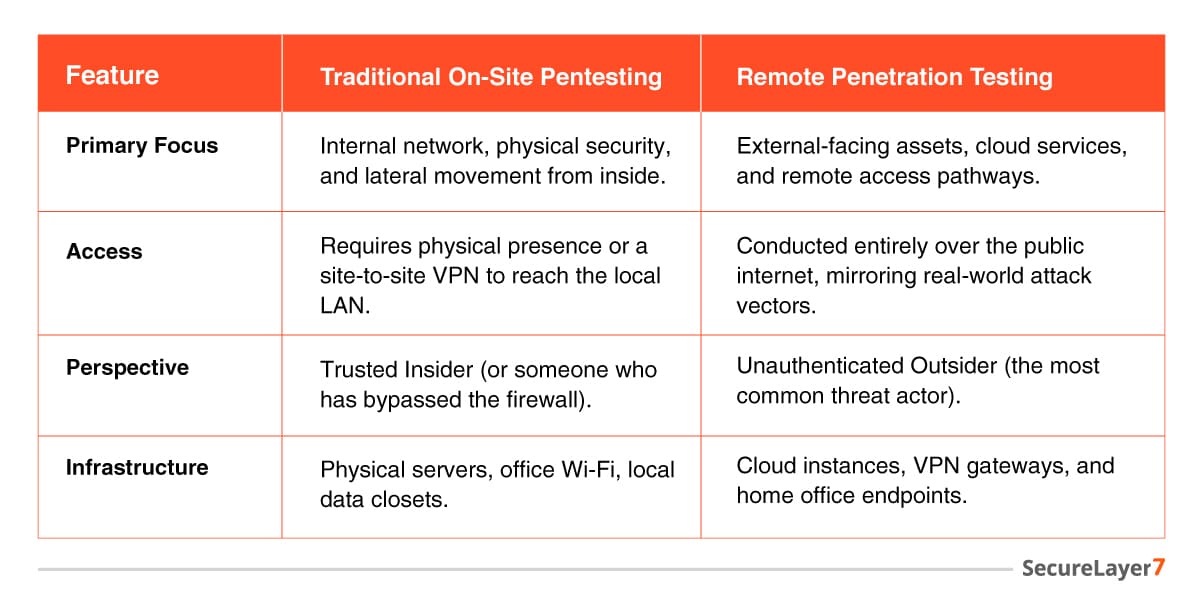
Remote vs. Traditional On-Site Pentesting
The fundamental difference lies in the perspective of the attacker.
Why Remote Pentesting is Essential for Modern Organizations
Employees now access corporate resources from various locations using laptops, mobile devices, VPN connections, and cloud applications, increasing potential entry points for attackers.
Remote penetration testing helps organizations:
- Identify security gaps in remote access solutions and cloud services.
- Validate the effectiveness of security controls protecting distributed environments.
- Detects vulnerabilities before cybercriminals exploit them.
- Support compliance requirements through documented security assessments.
Typical Targets of Remote Pentesting
Remote assessments shift the scope to the most exposed points of your infrastructure:
- VPN Gateways: The primary bridge between remote users and internal resources. Testers look for outdated encryption, vulnerable tunnel protocols, and susceptibility to credential stuffing.
- Cloud Services: Auditing configurations in AWS, Azure, or GCP to find mismanaged permissions (IAM), exposed storage buckets, or insecure API endpoints. Cloud penetration testing helps uncover misconfigurations, excessive permissions, and exposed resources across cloud environments.
- Remote Endpoints: Evaluating the security posture of corporate-issued laptops to ensure that local defenses hold up when the device is disconnected from the office.
- BYOD Devices: Assessing how Bring Your Own Device policies impact the risk of data leakage or whether these devices act as an easy entry point for malware into the corporate ecosystem.
Why Remote Penetration Testing Matters
Traditional security approaches focused on protecting internal networks are no longer enough, as organizations now operate across multiple locations, cloud platforms, remote devices, and third-party environments. Remote penetration testing helps businesses identify security weaknesses across these environments and verify whether existing defenses can withstand real-world cyber threats.
Rise in Remote Work Culture and Perimeter Dissolution
The shift toward remote and hybrid work models has changed the traditional concept of a corporate security perimeter. Employees, contractors, and partners increasingly access business systems from different locations using home networks, personal devices, and cloud-based applications.
This distributed operating model creates new security challenges, including:
- Increased exposure of remote access systems and VPN connections.
- Greater dependency on cloud applications and online services.
- Difficulty maintaining consistent security controls across remote environments.
Expanded Attack Surface with Remote Endpoints
Remote endpoints have become a major target for attackers due to weaker configurations, outdated software, insecure networks, and unauthorized access risks. Devices outside the corporate network can provide entry points for threats such as malware, credential theft, and unauthorized access.
Remote penetration testing helps identify vulnerabilities across:
- Employee laptops and remote workstations.
- VPN gateways and remote access solutions.
- Cloud infrastructure and SaaS applications.
- BYOD devices and unmanaged endpoints.
Regulatory and Compliance Drivers
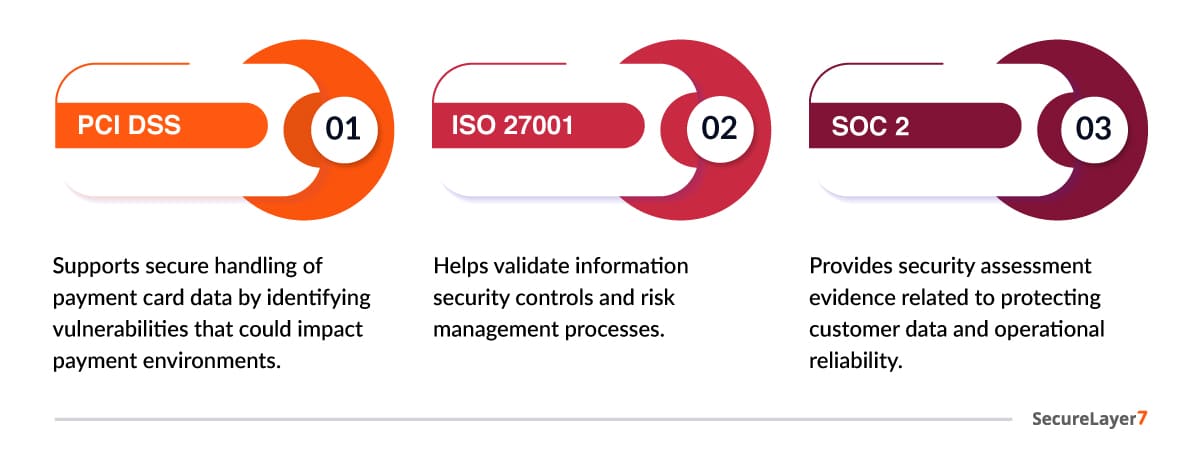
Many industries require organizations to demonstrate strong security controls and proactive risk management. Remote penetration testing supports compliance efforts by providing evidence that security measures are regularly evaluated and vulnerabilities are addressed.
Scope of Remote Penetration Testing
Defining the scope is one of the key steps in a remote penetration testing engagement. A clear scope ensures that security testers assess the right assets, simulate realistic attack scenarios, and provide useful findings without affecting business operations. The scope typically includes remote access technologies, cloud resources, endpoints, and collaboration platforms, clearly defining any excluded areas.
What’s Included in a Remote Pentest
Remote penetration testing evaluates the security of distributed environments, focusing on digital access points and remote infrastructure. Key areas include:
- Remote Endpoints: Assessing laptops, mobile devices, patching, EDR controls, and credential security.
- Remote Access Services: Testing VPNs, ZTNA, authentication controls, and MFA security.
- Cloud & SaaS Environments: Reviewing IAM configurations, storage security, and API integrations.
- Collaboration Platforms: Identifying data leakage risks, permission issues, and insecure sharing settings.
What’s Typically Excluded
To protect both the organization and the privacy of individual employees, clear boundaries must be established:
- Physical Penetration/In-Office Infrastructure: If the test is purely remote, physical hardware is usually excluded unless explicitly requested.
- Personal Home Networks: Ethical hackers typically do not test the security of an employee’s private home Wi-Fi router or personal IoT devices.
Remote Penetration Testing Methodology
A structured remote penetration testing methodology helps organizations systematically identify vulnerabilities, simulate realistic attack scenarios, and strengthen security controls across distributed environments. The process combines automated security assessments with manual testing techniques to evaluate remote endpoints, cloud services, access mechanisms, and potential attack paths.
Explore the Penetration testing process to understand the key stages involved in identifying, validating, and reporting security weaknesses.
Planning and Scoping
The foundation of a successful test lies in precise preparation to prevent operational disruption and ensure legal compliance.
- Asset Identification: Comprehensive mapping of all remote-facing assets, including corporate-issued laptops, mobile devices, cloud-native applications (SaaS/IaaS), and API endpoints.
- Rules of Engagement (RoE): Clearly defining boundaries, such as authorized testing hours, specific IPs/domains in scope, and prohibited actions.
Information Gathering
Testers gather intelligence to understand the target’s digital footprint before launching any attacks.
- Reconnaissance: Performing passive recon and active recon (port scanning, service identification) to build a profile of the target.
- Inventory: Cataloging operating systems, browser versions, installed remote access software, and active network protocols.
Vulnerability Identification
This phase focuses on finding weaknesses in the remote architecture. Understand Penetration testing vs vulnerability scanning and how these approaches differ in identifying and validating security weaknesses.
- CVE Scanning: Utilizing automated scanners to detect known vulnerabilities in software and operating systems.
- Misconfiguration Audits: Identifying low-hanging fruit such as default administrative passwords, overly permissive firewall rules, and weak VPN/SSO configurations.
- Patch Management Check: Pinpointing unpatched software on remote endpoints that are often missed by traditional, internal-only scanning tools.
Exploitation & Attack Simulation
This is the active phase where ethical hackers attempt to breach the perimeter. Comparing red teaming with penetration testing helps explain how these assessments approach real-world attack scenarios.
- Endpoint Exploitation: Attempting to bypass security on remote laptops via vulnerable remote-support software or exposed services.
- Credential Theft & Lateral Movement: Simulating how an attacker, once inside a remote device, attempts to steal credentials to pivot into internal corporate networks.
- Social Engineering: Launching controlled phishing campaigns to test employee awareness and the effectiveness of email filtering and endpoint protection.
Post-Exploitation Analysis
A foothold is established; the testers determine the depth of the potential impact.
- Persistence & Privilege Escalation: Assessing whether an attacker can maintain access after a reboot or elevate their permissions to administrative levels.
- Cascade Impact: Mapping the reach of the compromise can the attacker move from a single remote laptop to core databases, HR portals.
Tools & Technologies for Remote Penetration Testing
Effective remote penetration testing combines security tools and technologies to identify vulnerabilities, simulate real-world attacks, and assess security controls across distributed environments. Security professionals use automated scanners, endpoint monitoring tools, exploit frameworks, and cloud security tools to assess remote infrastructure effectively.
Vulnerability Scanners
These are the workhorses of any pentest. They systematically crawl your external attack surface to identify known vulnerabilities (CVEs) in software, services, and network protocols.
- Nessus (Tenable): The industry standard for identifying unpatched software, misconfigurations, and compliance gaps across remote endpoints and server infrastructure.
- OpenVAS: A powerful, open-source alternative that provides extensive coverage for vulnerability scanning and network service analysis.
- Qualys: Highly effective for remote environments, as it offers a cloud-based agentless scanning capability, making it ideal for auditing distributed IT assets without requiring them to be on a corporate VPN.
Endpoint Detection & Response (EDR) Integration
In a remote pentest, your goal is not just to find vulnerabilities, but to see if your Detection and Response layer can catch an intruder. Testers often simulate attacks that interact with EDR systems.
- EDR Tools: Testers evaluate whether these tools effectively block malicious remote execution, prevent lateral movement, or flag suspicious PowerShell commands.
- Detection Engineering: Testers act as Red Teams, creating payloads that are designed to trigger alerts. This helps the internal Blue Team tune their EDR alerts to reduce false positives catching genuine malicious activity from remote devices.
Remote Exploit Frameworks
When a vulnerability is identified, testers use exploit frameworks to safely demonstrate the risk. These tools are optimized to work over long-latency network connections, such as home internet.
- Metasploit Framework: The most versatile tool for developing and executing exploit code against remote targets. It allows testers to automate privilege escalation and post-exploitation steps.
- Burp Suite (Professional/Enterprise): Indispensable for web application testing. It allows testers to intercept, modify, and replay traffic between a remote user’s browser and the corporate web server to identify session riding, injection, or logic flaws.
- Impacket: A collection of Python classes used by testers to programmatically interact with network protocols, which is vital for simulating lateral movement within remote network tunnels.
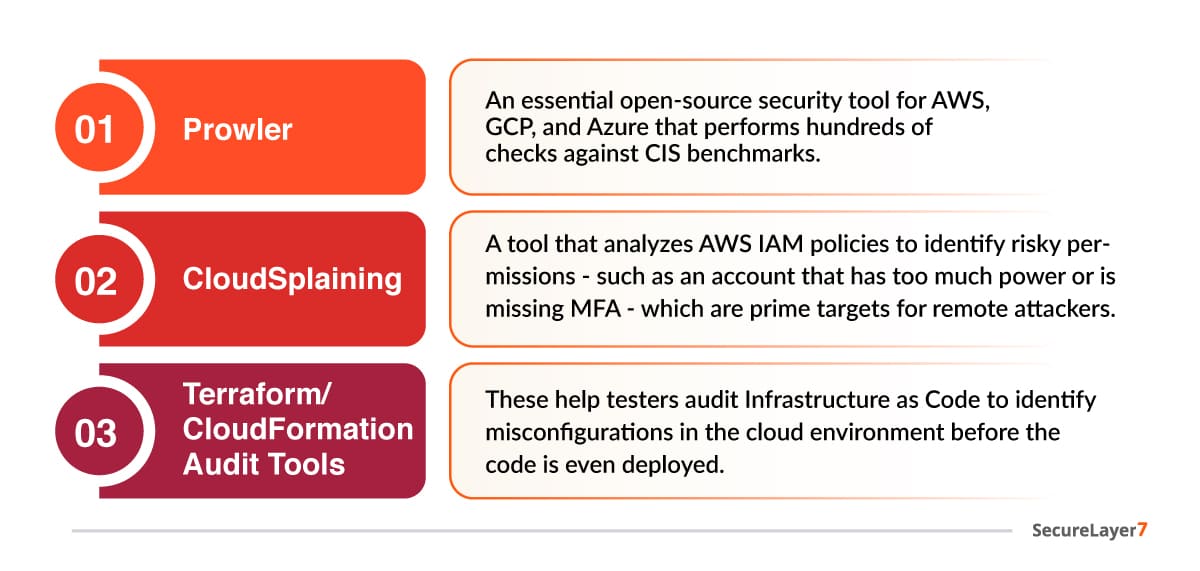
Cloud Configuration Assessment Tools
Because remote work relies heavily on the cloud, your pentest toolkit must include specialized instruments for auditing cloud environments (AWS, Azure, GCP).
Benefits of Remote Penetration Testing
As organizations continue to adopt remote work models, cloud services, and distributed infrastructure, securing remote environments has become a critical cybersecurity priority. Remote penetration testing helps organizations identify weaknesses across remote endpoints, cloud platforms, access systems, and applications by simulating real-world attack scenarios.
Following are the primary benefits of incorporating remote penetration testing into your security program:
Uncovers Security Gaps in Decentralized Environments
Modern IT environments are no longer limited to traditional corporate networks. Employees, applications, and infrastructure operate across multiple locations, cloud platforms, and third-party services, creating complex attack surfaces.
Remote penetration testing helps identify:
- Vulnerabilities in remote endpoints and access systems.
- Misconfigured cloud services and exposed resources.
- Weak authentication and authorization controls.
- Security gaps in distributed applications and networks.
Strengthens Remote Workforce Cybersecurity Posture
Remote employees often access sensitive business resources from different locations and devices, increasing security challenges. Remote penetration testing evaluates whether security controls are effective in protecting remote users and systems.
It helps organizations:
- Validate VPN and remote access security.
- Assess endpoint protection effectiveness.
- Identify risks associated with BYOD environments.
- Improve security awareness through simulated attack scenarios.
Reduces Risk of Breaches from Remote Endpoints
Remote endpoints such as laptops, mobile devices, and home-access systems are common targets for cybercriminals. A compromised endpoint can provide attackers with a pathway into corporate networks and sensitive data.
Remote penetration testing helps reduce breach risks by:
- Detecting outdated software and missing patches.
- Identifying weak endpoint configurations.
- Testing access control mechanisms.
- Simulating attacker techniques such as credential compromise and lateral movement.
Challenges of Remote Penetration Testing
Remote penetration testing provides organizations with an effective way to evaluate security across distributed environments; it also introduces unique challenges. Remote work models, personal devices, privacy concerns, and rapidly changing technologies can make security assessments more complex. Understanding these challenges helps organizations plan effective testing strategies maintaining security, compliance, and operational efficiency.
Limited Visibility into Personal Devices and Networks
One of the major challenges in remote penetration testing is limited visibility into employee-owned devices and personal networks. Many organizations operate in hybrid environments where employees may access corporate resources using personal laptops, home Wi-Fi networks, or unmanaged devices.
Challenges include:
- Limited control over personal device configurations.
- Difficulty assessing home network security settings.
- Lack of visibility into unauthorized applications or software.
- Challenges in validating endpoint security controls.
Privacy Considerations and Ethical Boundaries
Remote penetration testing must balance security evaluation with employee privacy and regulatory requirements. Testing personal devices, home networks, or user activities without proper authorization can create privacy risks.
Important considerations include:
- Clearly defining in-scope and out-of-scope assets.
- Obtaining proper authorization before testing.
- Avoiding unnecessary collection of personal information.
- Following ethical hacking guidelines and data protection requirements.
Coordination With Remote Staff
Since remote penetration testing involves users and systems distributed across different locations, coordination can become challenging. Security teams need effective communication to minimize disruption and ensure successful testing.
Common challenges include:
- Scheduling testing activities across different time zones.
- Informing employees about authorized security testing.
- Avoiding confusion between real attacks and simulated activities.
- Ensuring timely access to required systems and resources.
Best Practices for Remote Penetration Testing
A successful remote penetration testing engagement requires a structured approach that balances thorough security testing with operational safety. Following established best practices helps organizations identify critical vulnerabilities, get useful insights from testing, and strengthen their security defenses.
Define Clear Scope with Risk Tolerance
Establishing a well-defined scope is the foundation of effective remote penetration testing. Organizations should clearly identify which systems, applications, and devices will be tested considering business impact and acceptable risk levels.
Best practices include:
- Identify critical assets such as remote endpoints, VPNs, cloud services, and SaaS applications.
- Define testing objectives, including vulnerability discovery, compliance validation, or attack simulation.
- Establish rules of engagement, including permitted techniques, testing timelines, and communication procedures.
Combine Automated Tools with Manual Testing
Automated security tools help identify vulnerabilities quickly, manual testing provides deeper analysis and contextual understanding. Combining both approaches delivers more accurate and comprehensive results.
Explore how web application penetration testing combines automated discovery with manual validation to uncover exploitable vulnerabilities.
A balanced approach includes:
- Using vulnerability scanners to identify known security issues, misconfigurations, and outdated software.
- Performing manual testing to validate vulnerabilities and discover complex attack paths.
- Analyzing business logic flaws that automated tools may overlook.
Use Real-World Threat Emulation
Remote penetration testing should simulate realistic attacker behavior rather than focusing only on theoretical vulnerabilities. Threat-based testing helps organizations understand how attackers could compromise remote environments.
Real-world threat emulation may include:
- Simulating phishing and social engineering attacks against remote users.
- Testing credential theft and authentication weaknesses.
- Evaluating VPN, cloud, and endpoint security controls.
Conclusion
Remote penetration testing helps organizations secure distributed environments by identifying vulnerabilities across remote endpoints, VPNs, cloud services, and access systems before attackers exploit them. Combining automated tools with expert manual validation enables accurate risk assessment, effective remediation, and stronger cyber resilience.
Regular remote security assessments help maintain compliance, protect sensitive data, and reduce breach risks. SecureLayer7 provides comprehensive remote penetration testing services to uncover vulnerabilities, validate security controls, and strengthen defenses against evolving cyber threats.
Partner with SecureLayer7 today to secure your remote infrastructure and stay ahead of attackers.

