

A penetration testing report shows the outcome of the pentesting exercise including key findings, testing scope, what methodologies were used, how serious they are, and how attackers could exploit them, which systems are affected, and which of them you need to fix first.
In addition, it also recommends specific steps to strengthen the security environment of the tested systems.
In short, a pentesting report provides a strategic roadmap for organizations to improve remediation effort for the vulnerabilities found and meeting various mandatory compliance requirements like PCI DSS, OWASP, and NIST CSF. Without a clear report, critical findings often remain unresolved long after the test is complete.
Unlike automated vulnerability scanning reports, which are machine generated, a pentesting report involves a deep human involvement.
It’s largely for the consumption of developers, CISOs, security engineers, and compliance teams. Based on the engagement scope, it’s also known as the VAPT report.
Types of Penetration Testing Report
Penetration testing reports are structured documents that translate technical vulnerabilities into actionable business intelligence. They vary based on the tester’s access level, the specific environment being tested, and the intended audience.
Testing Types by Access Level
Penetration testing reports are categorized by the level of access and information provided to the tester prior to the assessment.
- Black-box reports reflect the perspective of an external attacker who has no prior knowledge of the target system, focusing primarily on reconnaissance and perimeter defense.
- In contrast, white-box reports are the result of a deep-dive review where the tester is granted full access to source code, architecture diagrams, and internal credentials to identify complex logic flaws.
- Gray-box reports fall between these two extremes and utilize partial internal insight to simulate a more efficient attack, often mimicking a standard user or a malicious insider.
Various report formats are also tailored to as per target scope, such as
- External reports focus on internet-facing assets and public footprints.
- Internal reports evaluate the risk within the corporate network, focusing on lateral movement and data exfiltration.
Additionally, location specific reports include:
- Web Application: Targets logical flaws, session management, and injection vulnerabilities specific to web services.
- Hardware/Embedded: Analyzes physical device security, firmware integrity, and local communication protocols.
- API pentesting reports include the findings of the API environment.
- Cloud infrastructure and wireless report.
Related Article: A Detailed Guide to Penetration Testing: Types And Scope
Key Sections of Penetration Testing Report
A typical penetration testing report contains, an executive summary, attack narrative, testing scope, validated findings, methodologies used, CVSS severity scores of vulnerabilities detected, proof-of-concept evidence, and remediation recommendations.
1. Executive Summary
Executive summary is the high-level overview of penetration testing exercise objectives, timelines, critical findings, and quick wins if any. It provides a quick overview in non-technical language of what you can expect from this report.
This section is for C-suite executives, board members, and non-technical stakeholders. If you don’t want to study the entire report, only studying Executive Summary is enough.
2. Scope And Methodology
This section explicitly states the detailed scope of the testing, including IP ranges, APIs, specific cloud components, while specifying exclusions and rules of engagement.
For the purpose of auditability and reproducibility, the report documents the list of all tools used to carry out penetration testing, such as Burp Suite and Metasploit.
In short, it contains the following:
- in-scope or tested assets
- Clearly mentions testing timeframes and windows
- Any specific rules of engagement
- List of tools and software used
3. Findings And Evidences
Each of these findings should be presented with sufficient detail so that other testers could work upon it:
- Description: Explain the vulnerability and where it’s located.
- Affected components: Clearly specify specific hosts, API endpoints, applications, or cloud components that can be impacted.
- Proof of concept: Include related screenshots or code snippets to prove exploitation.
- Steps to reproduce: Explain step-by-step instructions for testers.
- CWE/OWASP mapping: Map these findings and evidences with C Common Weakness Enumeration or OWASP Top 10 categories.
The quality of presented evidence determines the report’s credibility. If you mention findings without PoC are not validated risks.
4. Risk-rating And Prioritization
The Common Vulnerability Scoring System, also known as CVSS, assigns a numerical base score from Low to Critical. Low CVSS score means less risk and high CVSS score means the risk is higher. Here is how SANS explains it:
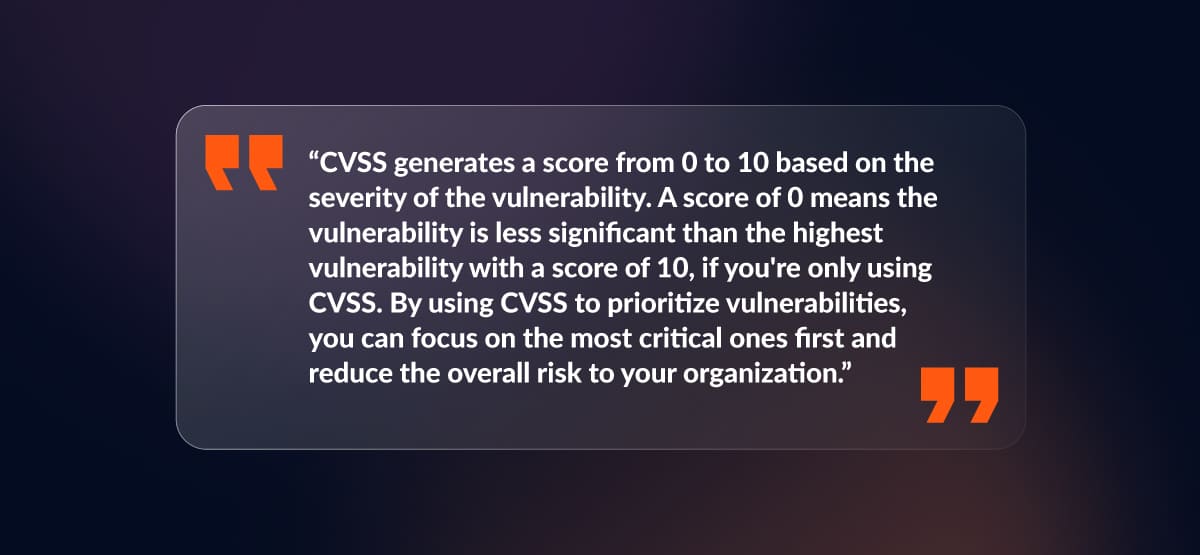
Severity score is determined on various factors like blast radius (potential damage) and exploitability. A good report justifies the rating by clearly setting the context.
5. Remediation And Recommendation
Every finding must clearly include actionable recommendations to fix the vulnerability, including options for providing multiple remediation pathways.
It should range from immediate software patches and configuration to complete architectural redesigns.
Strong reports does not merely list technical actions, it traces a production vulnerability back to the originating code repository and CI/CD pipeline.
6. Appendix
The appendix section may include screenshots, network diagrams, logs, proof-of-concept code, or technical evidence collected during the assessment.
The exact format can vary as per organization’s requirements and preferences, the approach should be easier to understand and act.
The Qualities of a Good Penetration Testing Report
Not all pentest reports are good. A quality pentest report has a few obvious markers:
- A report must justify the severity risk score in the right context. It should be based on real-world business impact.
- It must state an explicit attack narrative like a story. It should feel like how an attacker will move through the environment.
- The language of the report should be according to the target audience.
- Each finding should encompass one specific fix.
- The report should be relevant to the existing environment.
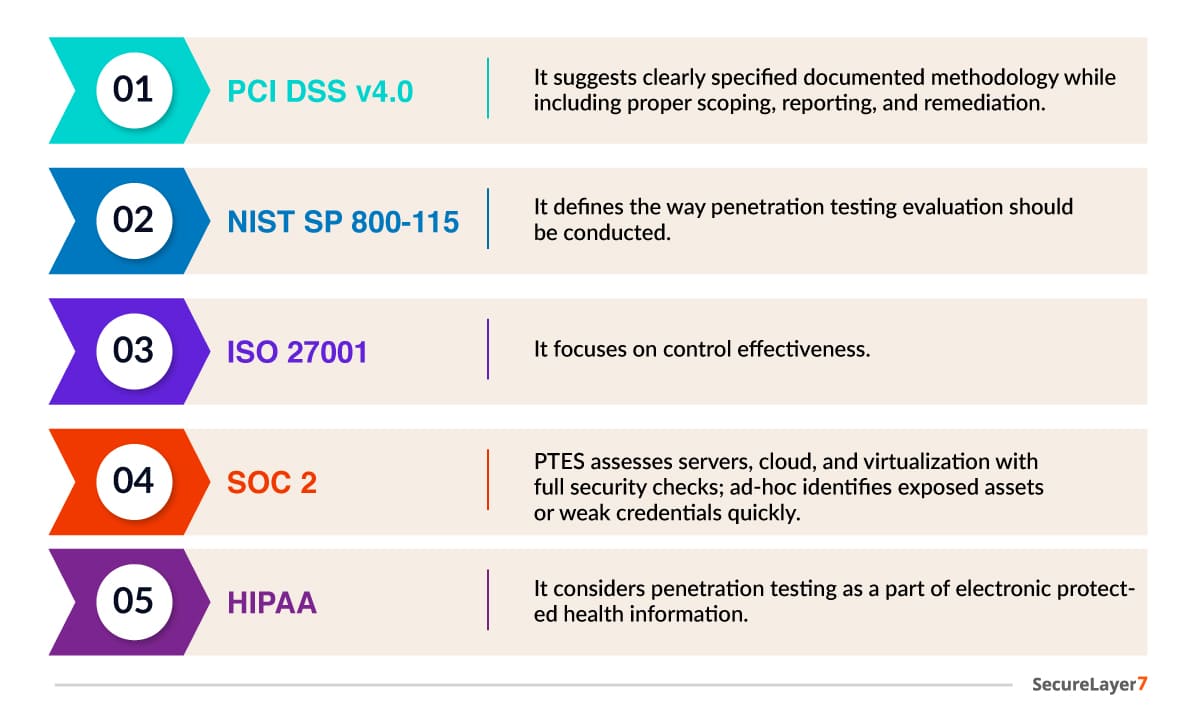
- A penetration testing report should be in accordance with applicable industry standards and regulatory frameworks (e.g., ISO 27001, NIST, HIPAA, PCI DSS).
How should teams act on a penetration testing report?
Integrating these findings into existing ticketing systems like Jira or ServiceNow ensures that remediation is tracked alongside standard engineering work.
For executives:
- Immediately review and assess the business implications of identified threats.
- Evaluate the organization’s overall cybersecurity risk posture.
- Assign responsible owners and establish fixed timelines.
- Ensure remediation areas have assigned owners and accountability. processes in place.
Developers and engineers:
- Work through highlighted vulnerabilities based on severity, blast radius, and business impact.
- Retest after each fix, major change, and at least annually.
- Carefully validate and document all fixes before closure.
All stakeholders should measure KPIs on retesting:
Organizations should track three specific KPIs:
- MTTR for critical and high findings
- The critical fix rate within SLA
- The recurrence rate across consecutive engagements.
Each finding should be routed directly to the team that owns the affected asset, supported by clear SLAs and escalation paths.
Strategic focus:
Implement the NIST cybersecurity framework and maintain a six-point cadence across cybersecurity management.
Penetration Testing Reports Frameworks
Several compliance frameworks have explicitly prescribed what are the things that a report must include:
Understanding Risk Metrics: CVSS vs. SANS Severity
To provide a clear roadmap for remediation, Common Vulnerability Scoring System report utilizes two distinct scoring systems to translate technical flaws into actionable business intelligence.
CVSS (Common Vulnerability Scoring System)
- Numerical Scoring: CVSS assigns a standard numerical base score ranging from 0 to 10
- Risk Categorization: A score of 0 represents the least significant vulnerabilities, while a score of 10 indicates the most critical risks
- Prioritisation: Its primary purpose is to help organizations prioritize vulnerabilities so they can focus on the most critical threats first to reduce overall risk
SANS Severity Score:
- Factor-Based Assessment: Rather than relying solely on a fixed numerical scale, the SANS score is determined by specific factors such as “blast radius” (the potential damage a vulnerability could cause) and exploitability (how easily it can be used by an attacker)
- Contextual Justification: A high-quality report using SANS severity must justify the rating by clearly defining the specific context of the vulnerability
- Business Impact: This scoring method is heavily based on real-world business impact rather than just technical severity.
While CVSS offers a standardized numerical framework for ranking technical flaws, SANS severity focuses on the broader impact and “story” of the vulnerability within a specific business environment.
The Bottomline
On a final note, a good quality penetration testing report bridges the gap between findings and actually fixing vulnerabilities, while clearly breaking down key findings and business impact.
It sets a clear roadmap of what various stakeholders need to do to improve their cybersecurity resilience. It helps prevent security weaknesses from percolating and causing potential incidents in the future.
Looking to strengthen your security posture? SecureLayer7 helps organizations identify vulnerabilities, reduce risk, and defend against evolving cyber threats. Contact our experts to get started.
Frequently Asked Questions (FAQs)
The report should only be shared with authorized stakeholders such as security teams, IT administrators, management, compliance officers, and system owners because it contains sensitive security details.
No. Automated scanning finds common vulnerabilities, but penetration testing validates real-world exploitability and uncovers complex issues that tools often miss.
Remediation is usually tracked through ticketing or vulnerability management systems, where findings are assigned owners, deadlines, and statuses until fixes are verified through retesting.
