
Organizations increasingly rely on cloud environments to deliver applications, services, and business operations. Cloud platforms provide scalability and flexibility, but they also introduce new security challenges. A cloud security risk assessment is a structured process that helps businesses identify vulnerabilities, evaluate threats, and implement appropriate controls to protect cloud assets, data, and workloads.
Unlike traditional on-premises risk assessments, cloud risk assessments need to account for shared responsibility models, dynamic infrastructure, and the complexity of multi-cloud environments. By assessing risks and security controls across cloud services such as IaaS, PaaS, and SaaS, organizations can reduce exposure, support compliance, and improve the security of their cloud environments.
Importance of Evaluating Cloud Environments for Threats
Cloud environments are uniquely complex. Because resources can be spun up instantly via APIs, infrastructure configuration is essentially code and human error can quickly introduce severe vulnerabilities.
- Preventing Compound Attack Paths: A single misconfiguration might seem minor, but when combined with an over-privileged service account, it can give an attacker a clear lateral movement path to core databases.
- Combating Shadow IT: Development teams frequently deploy third-party integrations, databases, or test clusters outside of formal IT oversight.
- Defending Identity Perimeters: Identity is the new perimeter. Evaluating how users and non-human machine identities authenticate and authorize actions is essential to preventing credential compromise.
Role in Compliance, Governance, and Risk Mitigation
A cloud security assessment strengthens governance, risk management, and compliance by helping organizations identify risks, enforce security standards, and maintain audit readiness.
- Compliance Readiness: Supports continuous alignment with standards such as SOC 2, ISO 27001, HIPAA, PCI DSS, and GDPR.
- Governance Enforcement: Validates cloud configurations against security policies, baselines, and secure design practices.
- Risk Mitigation: Identifies and prioritizes vulnerabilities based on exploitability and asset criticality to reduce breach risks.
What is a Cloud Security Risk Assessment?
A cloud security risk assessment is a structured evaluation used to identify, assess, and reduce risks associated with cloud environments. It examines the security of cloud workloads, applications, storage, and network configurations to identify vulnerabilities that attackers could exploit. The assessment also considers operational and governance risks across the organization’s cloud infrastructure. Cloud penetration testing can help identify exploitable vulnerabilities and misconfigurations across cloud infrastructure and services.
Differences from General IT Risk Assessments
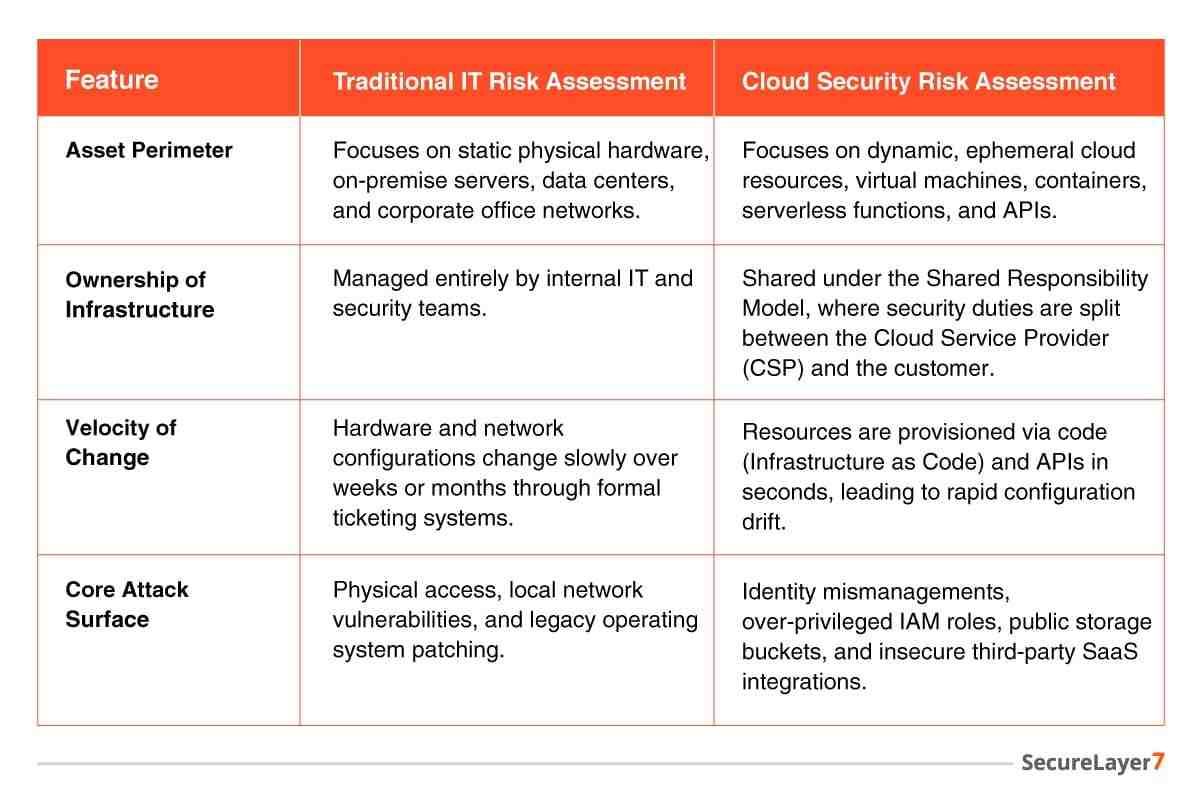
Both traditional IT risk assessments and cloud security assessments aim to identify vulnerabilities and protect organizational assets, their methodologies, targets, and operational contexts differ significantly:
Scope: Cloud Infrastructure, Applications, and SaaS Services
Cloud security risk assessments cover a broad range of assets, including:
- Cloud Infrastructure: IaaS and PaaS environments, virtual machines, containerized workloads, and networking components.
- Cloud Applications: Custom applications deployed on cloud platforms, APIs, and serverless functions.
- SaaS Services: Third-party software-as-a-service applications, integrations, and identity/access management configurations.
Regulatory Drivers: PCI DSS, SOC 2, ISO, HIPAA
Cloud environments are subject to a range of regulatory and compliance requirements. A cloud security risk assessment helps organizations demonstrate adherence to standards such as:
- PCI DSS: Secures payment card data in cloud-hosted applications and services.
- SOC 2: Provides assurance over cloud service security, availability, and confidentiality.
- ISO 27001: Validates information security management and risk mitigation practices.
- HIPAA: Ensures protection of sensitive healthcare data in cloud environments.
Key Components of Cloud Security Risk Assessment
A comprehensive cloud security risk assessment includes several key components to ensure that cloud assets, configurations, and potential threats are properly evaluated. Understanding these components helps organizations implement appropriate controls, reduce risks, and maintain compliance across cloud environments.
Asset Discovery
Asset discovery is the first step in a cloud security risk assessment. It involves identifying and cataloging all cloud resources to gain a complete understanding of the attack surface. Network Vulnerability Assessment can help identify vulnerabilities across network infrastructure, exposed services, and security configurations.
- Virtual Machines (VMs): Cloud-hosted servers and computer instances.
- Containers: Kubernetes pods, Docker images, and container orchestration resources.
- Databases: Managed and self-hosted database services, including cloud-native databases.
- Storage: Cloud object storage, file systems, and data repositories.
- SaaS Applications: Third-party software-as-a-service solutions integrated with organizational workflows.
Threat Identification
Threat identification involves analyzing both internal and external risks that could compromise cloud assets. Zero Trust Security provides additional context on continuous authentication, access controls, and protecting distributed cloud environments.
- Internal threats: Misconfigurations, insider threats, or human error.
- External threats: Cyberattacks such as ransomware, phishing, API exploitation, or denial-of-service attacks.
- Cloud-specific risks: Mismanaged access controls, insecure API endpoints, and third-party integration vulnerabilities.
Vulnerability Evaluation
After assets and threats are identified, a vulnerability evaluation assesses weaknesses that could be exploited. Key areas include:
- Misconfigurations: In cloud services, security groups, IAM policies, and network settings.
- Exposed endpoints: Publicly accessible services without proper security controls.
- Insecure APIs: Weak authentication, authorization, or unvalidated inputs in application programming interfaces.
Step-by-Step Cloud Security Risk Assessment Process
A structured cloud security risk assessment process helps organizations identify security weaknesses, evaluate potential risks, and implement effective controls across cloud environments. A systematic approach helps businesses improve their cloud security posture, protect sensitive data, and maintain compliance with industry standards.
Planning & Scoping
The foundation of any assessment is a well-defined scope. Rushing into technical testing without clear boundaries can lead to missed assets or unintended disruptions to production workloads.
- Define Objectives, Environment Boundaries, and Stakeholders: Establish what the assessment aims to achieve. Clearly outline environment boundaries specifying whether the assessment covers production, staging, multi-cloud footprints, or specific business units and align key technical and business stakeholders.
- Identify Critical Assets and Data Flows: Map out crown-jewel assets, such as customer databases, intellectual property repositories, and payment processing environments.
Threat & Vulnerability Identification
Once scope and assets are established, the assessment shifts to uncovering technical flaws, security gaps, and potential threat vectors.
- Automated Scanning: Use CSPM tools and vulnerability scanners to detect misconfigurations, vulnerabilities, exposed resources, and compliance gaps.
- Manual Configuration Review and Penetration Testing: Validate complex risks through IAM reviews, configuration analysis, and targeted security testing.
Risk Analysis & Prioritization
Alerts and vulnerability findings can easily overwhelm security teams. A rigorous analysis phase ensures focus is directed toward the most dangerous exposures.
- Likelihood and Impact Scoring: Evaluate risks based on exploitability, exposure, asset sensitivity, and business impact.
- Prioritization for Remediation: Rank vulnerabilities using risk-based approaches to address critical issues first.
Remediation & Mitigation
Identifying risks provides zero value if findings are not resolved. This phase bridges the gap between security insights and engineering action.
- Implement Controls: Apply patches, harden configurations, enforce MFA, and fix IAM permission issues.
- Verification and Continuous Monitoring: Validate remediation effectiveness and monitor for configuration drift or new risks.
Reporting
A successful assessment culminates in clear, actionable reporting tailored to different audiences across the organization.
- Executive Summary and Technical Reports: Deliver high-level, risk-focused summaries for executive leadership outlining business exposure and compliance posture, alongside granular technical reports detailing exact resource IDs, misconfigurations, and remediation steps for cloud engineers.
- Actionable Recommendations and KPIs: Provide clear, prioritized steps for fixing vulnerabilities, alongside Key Performance Indicators (KPIs) such as Mean Time to Remediate (MTTR) and compliance drift rates to measure security improvements over time.
Common Cloud Security Risks
As organizations increasingly adopt cloud platforms, security risks across cloud infrastructure, applications, and access controls also increase. A cloud security risk assessment helps identify these vulnerabilities and allows organizations to implement appropriate security controls before attackers can exploit them.
Following are some of the most common cloud security risks organizations encounter:
Misconfigured Cloud Storage
Misconfigured AWS resources can create additional exposure, particularly when storage, IAM, networking, and access controls are not properly configured. The AWS Security Issues guide covers common AWS risks such as S3 exposure and IAM misconfigurations.
Common storage-related risks include:
- Publicly accessible storage buckets or containers.
- Missing encryption for sensitive data.
- Improper access permissions.
- Lack of monitoring and logging.
Overprivileged Accounts and IAM Misconfigurations
IAM misconfigurations can become especially serious when excessive permissions allow a compromised account or service identity to access additional cloud resources. AWS Cloud Security Best Practices covers IAM, least privilege, MFA, and other AWS security controls.
- Excessive Permissions: Users, applications, and service accounts may have unnecessary administrative privileges, increasing security risks.
- Stale Identities: Unused accounts, former employee credentials, and outdated service accounts can remain active and become attack paths.
- Weak Authentication Controls: Missing MFA for privileged accounts increases the risk of credential theft through phishing and password attacks.
Insecure APIs and Third-Party Integrations
Cloud-native applications depend on APIs and SaaS integrations for data exchange and automation. Poorly secured integrations can create entry points for attackers and expose sensitive resources.
- Weak Authentication & Authorization: Insecure APIs without proper token validation, rate limiting, or access controls can enable unauthorized data access and attacks.
- Over-Privileged OAuth Permissions: Excessive OAuth scopes can grant third-party applications unnecessary access to sensitive cloud resources.
- Shadow APIs & Legacy Endpoints: Unmanaged test APIs, debug endpoints, and outdated services can bypass security controls and increase attack risks.
Tools & Technologies for Cloud Security Risk Assessment
A successful cloud security risk assessment requires tools and technologies that provide visibility into cloud environments, identify security weaknesses, detect compliance gaps, and support ongoing risk management. As organizations adopt multi-cloud, hybrid cloud, and cloud-native architectures, manual security reviews alone are often not enough.
Modern cloud security assessment tools combine automation, threat intelligence, compliance monitoring, and analytics to help security teams identify and address risks across cloud infrastructure, applications, identities, and data.
Cloud Security Posture Management (CSPM) Platforms
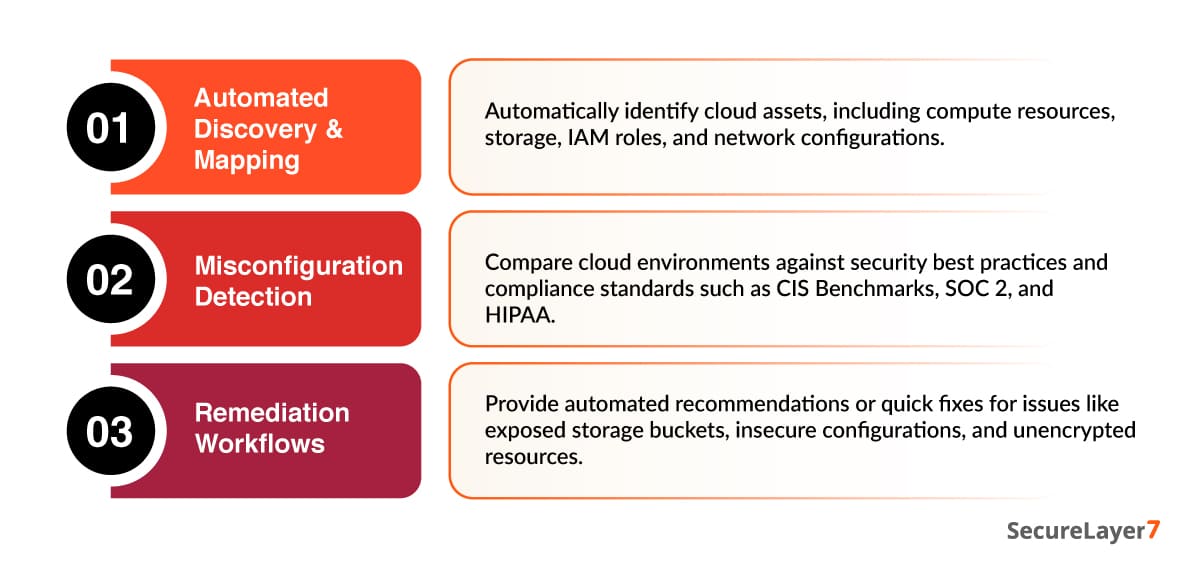
CSPM tools provide continuous visibility into cloud environments by identifying misconfigurations, compliance gaps, and security risks across multi-cloud infrastructures. Cloud Security Posture Management provides continuous visibility into cloud configurations, IAM permissions, exposed storage, network settings, and compliance risks.
Vulnerability Scanners and Automated Assessment Tools
CSPM focuses on cloud configuration risks, vulnerability scanners analyze software, workloads, containers, and endpoints to identify exploitable weaknesses.
- Workload & Container Scanning: Detects vulnerabilities, outdated packages, and malicious components in virtual machines, Kubernetes clusters, and serverless applications.
- Infrastructure as Code (IaC) Scanning: Identify security issues in Terraform, CloudFormation, and Kubernetes templates before deployment.
- Attack Path Analysis: Simulate potential attack chains by analyzing vulnerabilities, exposed services, and excessive permissions that could lead to critical data access.
Policy-as-Code and Compliance Monitoring Solutions
Policy-as-code integrates security rules into development workflows, enabling automated enforcement and continuous compliance throughout the software delivery lifecycle.
- Enforcing Guardrails: Security policies are defined as code and integrated into CI/CD pipelines to block non-compliant resources before deployment.
- Continuous Compliance Monitoring: Automatically tracks security and compliance requirements, reducing manual audits and maintaining ongoing governance.
Security Dashboards and Analytics
Security dashboards and analytics platforms consolidate data from CSPM tools, vulnerability scanners, and compliance systems into a centralized view for faster decision-making and risk management.
- Risk Prioritization & Scoring: Analyze context such as exposure, permissions, and asset criticality to identify high-impact risks.
- Actionable KPIs & Reporting: Track metrics like MTTR, compliance drift, and vulnerability trends to measure security improvements.
- Cross-Team Collaboration: Enable security teams, cloud engineers, and leadership to align on remediation priorities and improve risk management.
Challenges in Cloud Security Risk Assessment
Cloud security risk assessments help organizations identify vulnerabilities, strengthen security controls, and maintain compliance. Assessing modern cloud environments can be challenging. The dynamic nature of cloud infrastructure, complex architectures, and increasing use of unmanaged resources can make it difficult for security teams to maintain complete visibility and control.
Understanding these challenges helps organizations develop effective cloud security strategies and adopt proactive risk management practices.
Complexity of Multi-Cloud and Hybrid Cloud Setups
Many organizations operate across multi-cloud and hybrid cloud environments, using a combination of public cloud platforms, private infrastructure, and third-party services. This complexity increases the difficulty of maintaining consistent security controls across different environments.
Common challenges include:
- Different security models and configurations across cloud providers.
- Difficulty maintaining consistent identity and access management (IAM) policies.
- Limited visibility across distributed workloads and applications.
- Increased complexity in monitoring network connections and data flows.
- Challenges in applying uniform compliance requirements across platforms.
Rapidly Changing Cloud Configurations
Cloud environments are highly dynamic, with resources frequently created, modified, or removed based on business requirements. This flexibility improves scalability, it creates challenges for maintaining continuous security.
Common configuration-related risks include:
- Security settings changing without proper review.
- Temporary resources becoming permanently exposed.
- Configuration drift between approved and actual environments.
- New workloads deployed without security validation.
Shadow IT and Unmanaged Resources
Shadow IT refers to cloud services, applications, or resources used without approval or visibility from the organization’s IT and security teams. These unmanaged resources can create significant security risks because they may not follow established security policies.
Common Shadow IT risks include:
- Unknown cloud applications storing sensitive business data.
- Unmanaged user accounts and excessive permissions.
- Lack of security monitoring and logging.
- Non-compliant cloud services.
Best Practices for Cloud Security Risk Assessment
Implementing an effective cloud security risk assessment strategy requires strong governance, continuous security validation, and automated monitoring. As cloud environments become more dynamic and complex, organizations need proactive practices to identify risks, enforce security controls, and maintain compliance.
Following are the best practices that help organizations strengthen their cloud security posture and improve risk management.
Establish Clear Cloud Security Policies and Ownership
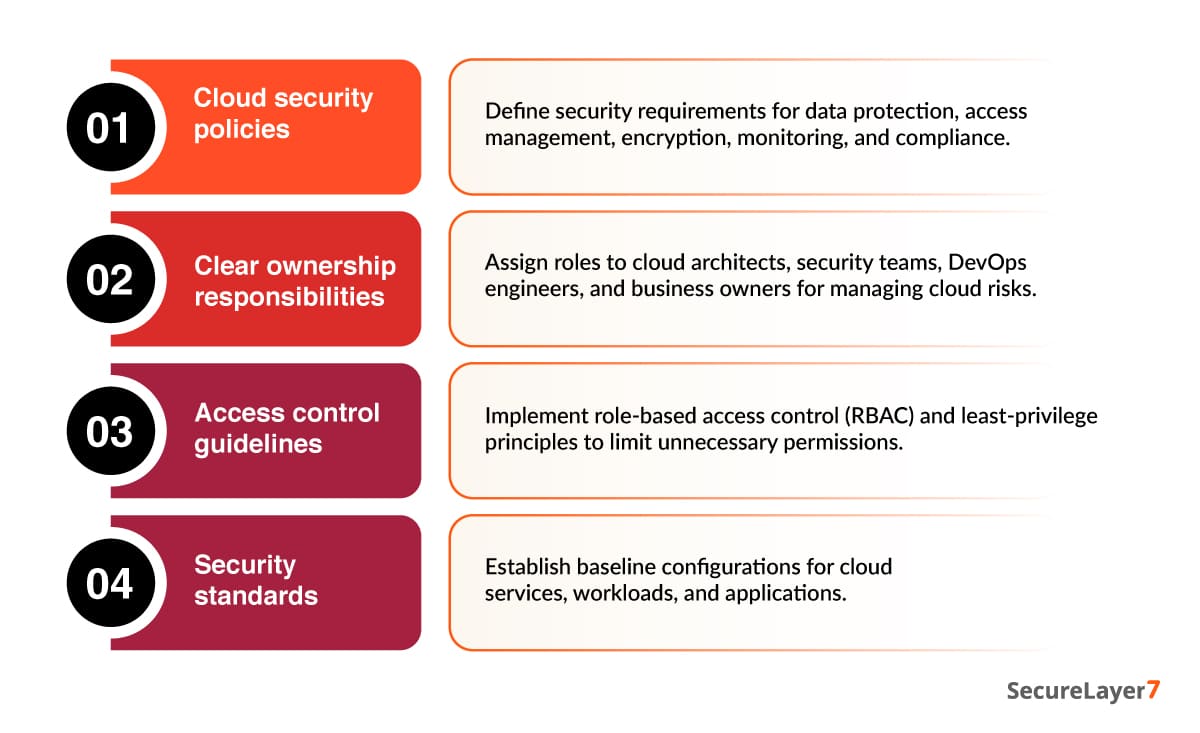
A strong cloud security foundation begins with clearly defined policies, responsibilities, and governance processes. Without proper ownership, security gaps can occur due to misconfigurations, unmanaged resources, or unclear accountability.
Organizations should establish:
Integrate Risk Assessment Into CI/CD and DevSecOps Pipelines
Modern cloud environments rely heavily on DevOps practices and continuous delivery models. Integrating cloud security risk assessment into CI/CD pipelines enables organizations to identify vulnerabilities before applications and infrastructure are deployed.
Key practices include:
- Integrating security testing into development workflows.
- Performing Infrastructure-as-Code (IaC) security reviews before deployment.
- Scanning cloud configurations for misconfigurations and compliance violations.
- Conducting automated vulnerability assessments during build and release processes.
Use Automation for Continuous Monitoring and Scanning
Manual reviews cannot keep up with rapidly changing cloud environments. Automation ensures continuous visibility, faster response, and consistent security controls.
- Continuous Posture Management: Use CSPM and Cloud Workload Protection Platforms (CWPP) to monitor cloud environments and detect security risks in real time.
- Automated Alerting and Triage: Configure workflows to notify responsible teams about critical risks, vulnerabilities, and configuration changes.
- Automated Remediation Guardrails: Use automated fixes to quickly address security issues, such as restricting accidentally exposed storage resources.
Real-World Examples & Case Studies
A cloud security risk assessment helps organizations identify vulnerabilities, evaluate security controls, and reduce the risk of incidents caused by cloud misconfigurations, weak access controls, and compliance gaps. Real-world scenarios show how proactive assessments can uncover hidden risks and help organizations strengthen their cloud security posture.
Misconfigured S3 Bucket Detection and Remediation
A fintech company migrated its customer onboarding workflow to AWS and used an Amazon S3 bucket to store sensitive documents such as identification files, tax forms, and address proofs. Due to misconfigured access controls, the bucket was accidentally exposed to the public.
Risk & Discovery:
- A misconfigured ACL and wildcard policy enabled unrestricted access to stored documents.
- CSPM tools detected the exposed S3 bucket and flagged it as a critical security risk.
- Manual review confirmed that over 140,000 customer documents were accessible without authentication.
SaaS Environment Assessment for Compliance
A healthcare SaaS provider preparing for a SOC 2 Type II audit expanded its cloud risk assessment to include third-party SaaS platforms such as Google Workspace, Salesforce, Jira, and GitHub. These integrations managed sensitive customer data and operational workflows.
Risk & Discovery:
- Over-Scoped OAuth Permissions: Third-party applications had excessive OAuth access, allowing unnecessary read/write permissions to sensitive repositories containing ePHI.
- Inactive User Accounts: Former contractors retained active administrative access across SaaS platforms, creating compliance and security risks.
Conclusion
Cloud security risk assessments help organizations identify vulnerabilities, manage threats, and protect critical cloud assets. By evaluating infrastructure, applications, identities, APIs, and configurations, organizations can strengthen security, governance, and compliance. A resilient cloud security strategy combines structured assessments, security tools, continuous monitoring, and established security practices.
SecureLayer7 helps organizations strengthen their cloud security posture through cloud security assessments, vulnerability identification, compliance validation, and risk mitigation strategies. Combining security expertise, appropriate technology, and continuous security practices helps businesses protect their cloud environments against emerging cyber threats.
Partner with SecureLayer7 today to implement continuous cloud security risk assessments and build a secure, compliant, and resilient cloud infrastructure.
Frequently Asked Questions (FAQs)
Cloud security risk assessment identifies, evaluates, and mitigates risks across cloud infrastructure, applications, workloads, identities, storage, and APIs. It helps organizations detect vulnerabilities, strengthen security controls, and improve compliance readiness.
Cloud risk assessments should be performed regularly or continuously, especially after major cloud changes, new deployments, migrations, security incidents, and compliance reviews. Continuous assessment helps maintain a strong cloud security posture.
Common tools include CSPM platforms for detecting cloud misconfigurations and compliance gaps, vulnerability scanners for identifying issues in workloads, applications, and containers, Policy-as-Code solutions for automating security policies, SIEM platforms for monitoring security events, and cloud-native security tools for tracking resources, access controls, and configuration changes.
Common cloud security risks include misconfigured cloud storage and exposed resources, overprivileged IAM accounts, insecure APIs, weak access controls, shadow IT, unmanaged cloud services, insufficient monitoring, and limited threat detection.
Cloud security risk assessments help organizations identify security gaps, validate controls, and maintain audit readiness for standards such as PCI DSS, SOC 2, ISO 27001, and HIPAA. These assessments help validate controls related to payment card data, security and operational processes, information security risk management, and sensitive healthcare data.

