
![Top Cloud Security Penetration Testing Companies [2026]](https://blog.securelayer7.net/wp-content/uploads/2023/09/Cloud-Security-Penetration-Testing-companies-1200x630.jpg)
The cloud environment is complicated because it keeps adding new APIs, connections, servers, and workloads, expanding the attack surface continuously. You need a reliable cloud security penetration testing company to ensure the cloud environment stays safe and secure.
However, choosing a cloud security partner is not easy. Cloud security partners need to identify real attack paths in complex environments, deliver clear, useful findings, and support the platforms most organizations depend on.
With this in mind, here is an overview of the top cloud security penetration testing companies, key USPs, and why choose them.
Best Cloud Security Penetration Testing Companies [2026]
Below, we have curated a list of cloud penetration testing companies that specialize in human-led cloud penetration testing.
1. SecureLayer7
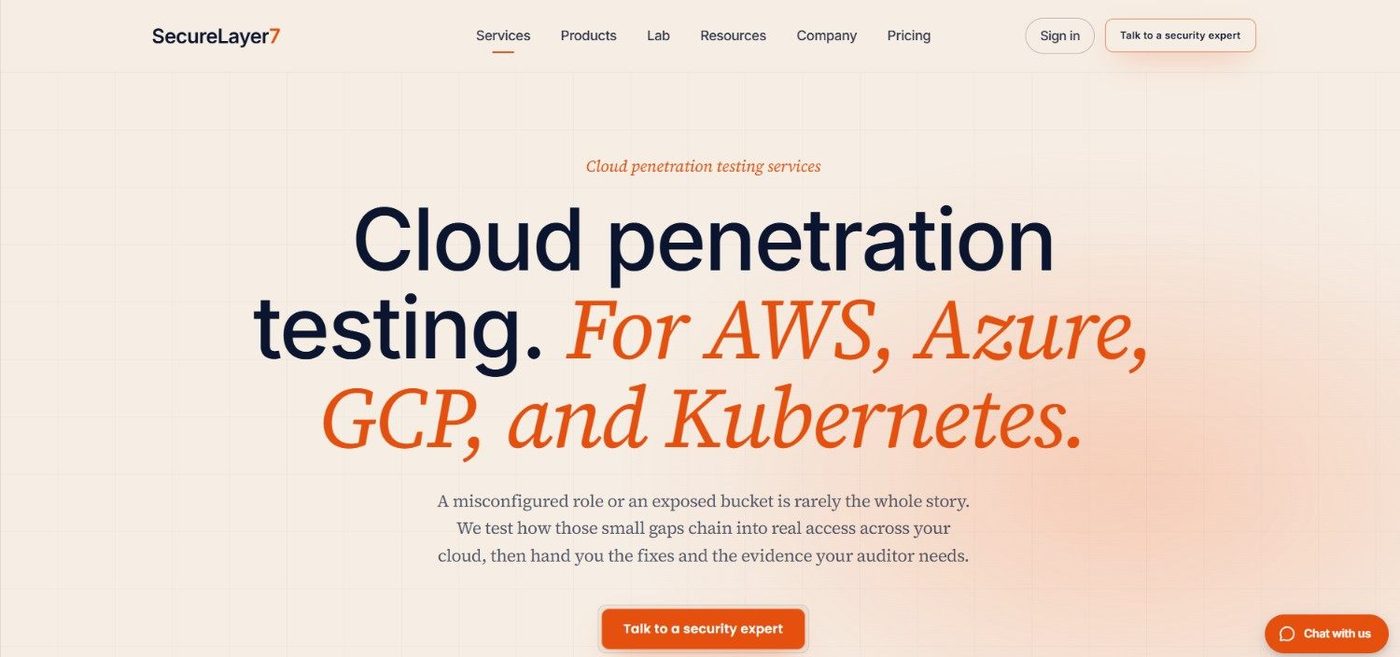
Powered by the BugDazz PTaaS platform, SecureLayer7 provides cloud penetration testing across AWS, Azure, GCP, and Kubernetes. It’s CREST accredited, ISO 27001, and SOC 2 Type II certified.
SecureLayer7’s cloud security testing methodology is not limited to checking cloud misconfigurations; it goes deeper to cloud identities, permissions, networks, workloads, and applications.
In addition, our experts also check IAM privilege escalation, role and service-account abuse, exposed storage, serverless permissions, Kubernetes controls, and cloud APIs.
SecureLayer7 possesses strong red team assessment capability to help businesses enhance their overall security posture.
Key USPs of SecureLayer7:
- Tests AWS, Azure, GCP, and Kubernetes through one cloud-pentest methodology
- Enterprise-scale delivery capabilities
- Tests IAM role chaining, managed-identity abuse, service-account impersonation, and Kubernetes RBAC weaknesses
- Converts identified weaknesses into reproducible proof-of-exploit rather than leaving them as theoretical findings
- Eight-step methodology from recon to retesting
Why Choose SecureLayer7:
SecureLayer7 can be a good option if your organization needs a partner having robust cloud security capabilities. What makes it stand out in the crowd is it’s suitable for both enterprises and small/mid-size firms looking for a trusted cloud security testing partner.
2. NetSPI
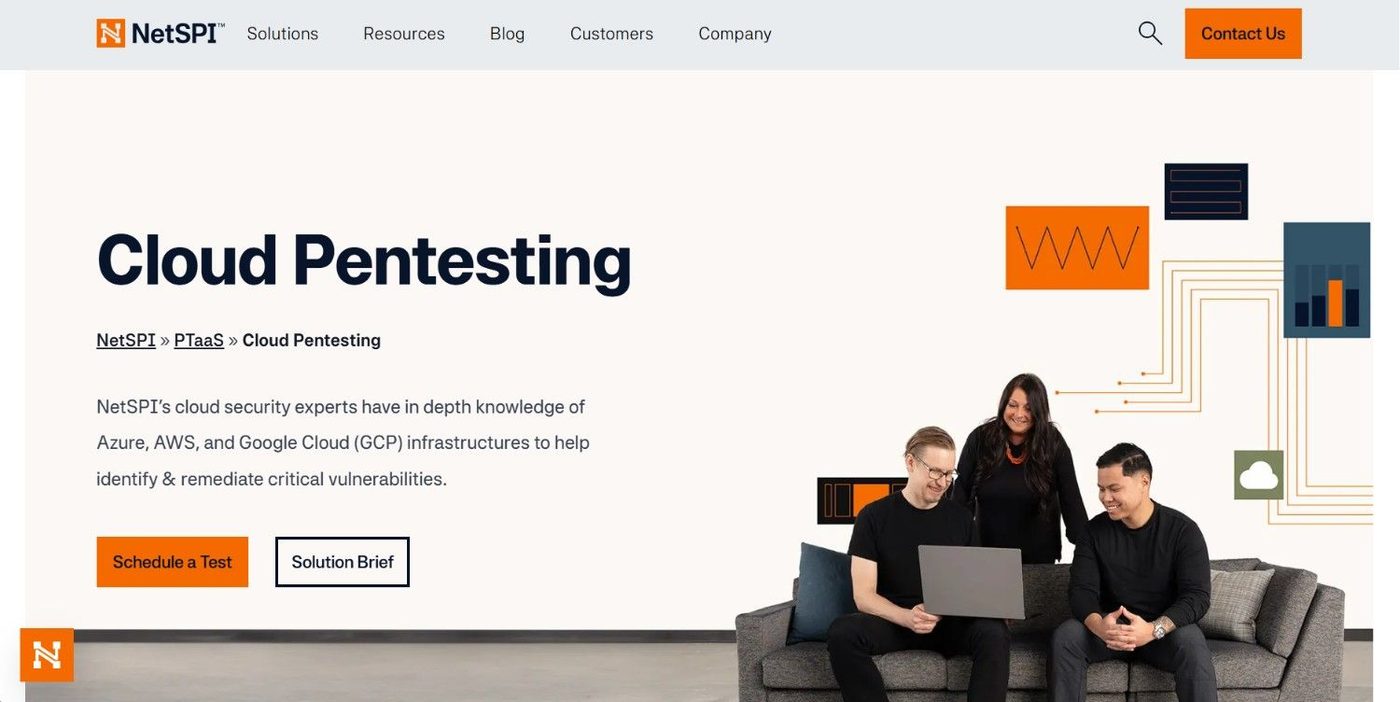
NetSPI provides cloud penetration testing for AWS, Azure, and GCP. Its approach combines configuration checks with hands-on testing to address issues like cloud identities, exposed resources, privilege escalation, storage, and cloud-based applications.
NetSPI stands out for its mature, large-scale penetration testing capabilities and strong focus on manual, expert-led testing. The company also offers a well-established PTaaS platform for continuous and repeatable assessments.
According to Gartner, it has 21,000+ engagements and 350+ in-house security experts.
Key USPs of NetSPI:
- Certified team of pentesters
- Published research demonstrates expertise in Azure-specific attack techniques
- PTaaS delivery to manage testing and findings continuously
Why Choose NetSPI:
NetSPI can be a reliable choice for businesses looking for scalable, ongoing penetration testing services. Its cloud coverage, PTaaS model, and structured remediation workflows make it suitable for organizations managing complex environments.
3. Bishop Fox
Bishop Fox provides cloud penetration testing across AWS, Azure, and GCP. Its methodology combines configuration review with hands-on penetration testing expertise. Being CREST certified, it has worked on more than 16000 projects and has 1000+ customer engagements that show its experience, as per Gartner.
Key USPs of Bishop Fox:
- Strong attack path focus
- AWS, Azure, and GCP coverage
- Hands-on cloud penetration testing
- Testing based on defined attack objectives
- Comprehensive offensive-security and red-team capabilities
Why Choose It:
Choose Bishop Fox when you are an enterprise firm where you need a partner to handle cloud penetration testing combined with broader offensive-security or red-team capabilities.
4. Pretorian
Founded in 2010 and headquartered in Austin, Texas, Praetorian specializes in penetration testing and adversary simulation. It has hands-on expertise in cloud attack-path testing across AWS, Azure, and GCP, including IAM, privilege escalation, Kubernetes, and serverless environments.
Gartner has specifically mentioned its capabilities in adversarial exposure validation.
Key USPs of Pretorian:
- Manually tests how cloud weaknesses can be exploited
- CREST-certified team of pentesters
- Multi-cloud depth covering AWS, Azure, and GCP, including IAM, Kubernetes, and serverless architecture
Why Choose Pretorian:
Praetorian can be a reliable choice for organizations that need attack paths validated through hands-on testing. Its established enterprise customer base also makes it suitable for complex environments.
5. Rhino Security Labs
Rhino Security Labs offers cloud penetration-testing services with a strong focus on AWS cloud security. It involves IAM, EC2, S3, Lambda, and other AWS services. Rhino Security Labs has proprietary cloud-security research and tools geared toward AWS attack techniques.
Key USPs of Rhino Security Labs:
- Strong AWS penetration-testing specialization
- Detailed IAM and permission testing
- Expert AWS testing specialist
- EC2, S3, and Lambda assessment
- Cloud-specific security research
- Deep-dive manual testing
Why Choose Rhino Security Labs:
If you are looking for a strong AWS Cloud security company, Rhino Security Labs can be a great fit.
6. NCC Group
Established in 1999 and headquartered in Manchester, UK, NCC Group is a global cybersecurity company. It is known for hands-on cloud security work across AWS, Azure, and GCP, along with strong penetration testing, red teaming, and attack simulation expertise. It has NCSC CHECK and CREST accreditations.
Key USPs of NCC Group:
- Multi-cloud security testing
- Cloud-first penetration testing
- Application and infrastructure testing
- Red-team capabilities
- Global delivery capabilities
Why Choose NCC Group:
Choose NCC Group when cloud penetration testing forms part of a larger global offensive-security or assurance program.
7. Mandiant / Google Cloud
Mandiant, a Google Cloud company, is known for penetration testing, red teaming, and adversary-simulation services for large-scale firms. Its broader security capabilities make it particularly relevant when organizations want cloud testing alongside simulated attacks and other offensive-security activities.
Key USPs of Mandiant:
- Threat-intelligence-led testing based on the TTPs observed in real-world incident-response engagements
- Realistic attack simulation
- Deep offensive expertise with decades of incident-response experience.
Why Choose Mandiant:
Choose Mandiant when cloud penetration testing needs to be part of a wider red-team, adversary-simulation or enterprise security program.
8. IBM X-Force Red
IBM X-Force Red brings a large offensive-security practice to cloud penetration testing, with 200+ hackers worldwide and testing that covers cloud assets alongside applications, networks, and other infrastructure. Its own analysis of hundreds of penetration tests found excessive cloud privileges enabled compromise in 99% of engagements, highlighting the practical depth of its cloud testing, and that’s why this is on the list.
Key USPs of IBM-X Force Red:
- Real-world threat intelligence that combines penetration testing with threat intelligence and incident-response data.
- Broad testing scope encompassing application, network, hardware, IoT, and physical-security testing.
Why Choose IBM X-Force Red:
Choose IBM X-Force Red when cloud testing needs to be integrated into a wider enterprise penetration-testing or offensive-security program.
9. Cobalt
Cobalt is a reputed cloud security testing provider offering manual and tool-based vulnerability scanning. Its platform supports recurring testing, real-time results, collaboration, reporting, and development-workflow integrations.
Cobalt also offers a cloud penetration testing platform within its offensive-security services. Independent G2 feedback also points to strong usability, communication, and reporting, though some reviewers question testing depth and cost.
Key USPs of Cobalt:
- Manual assessment of cloud infrastructure
- Aligned to OWASP Top 10
- Multi-cloud testing coverage
- Attack simulation
- Centralized reporting and remediation workflows
Why Choose Cobalt:
Cobalt can be a good fit for organizations looking for multi-cloud support.
10.DeepStrike
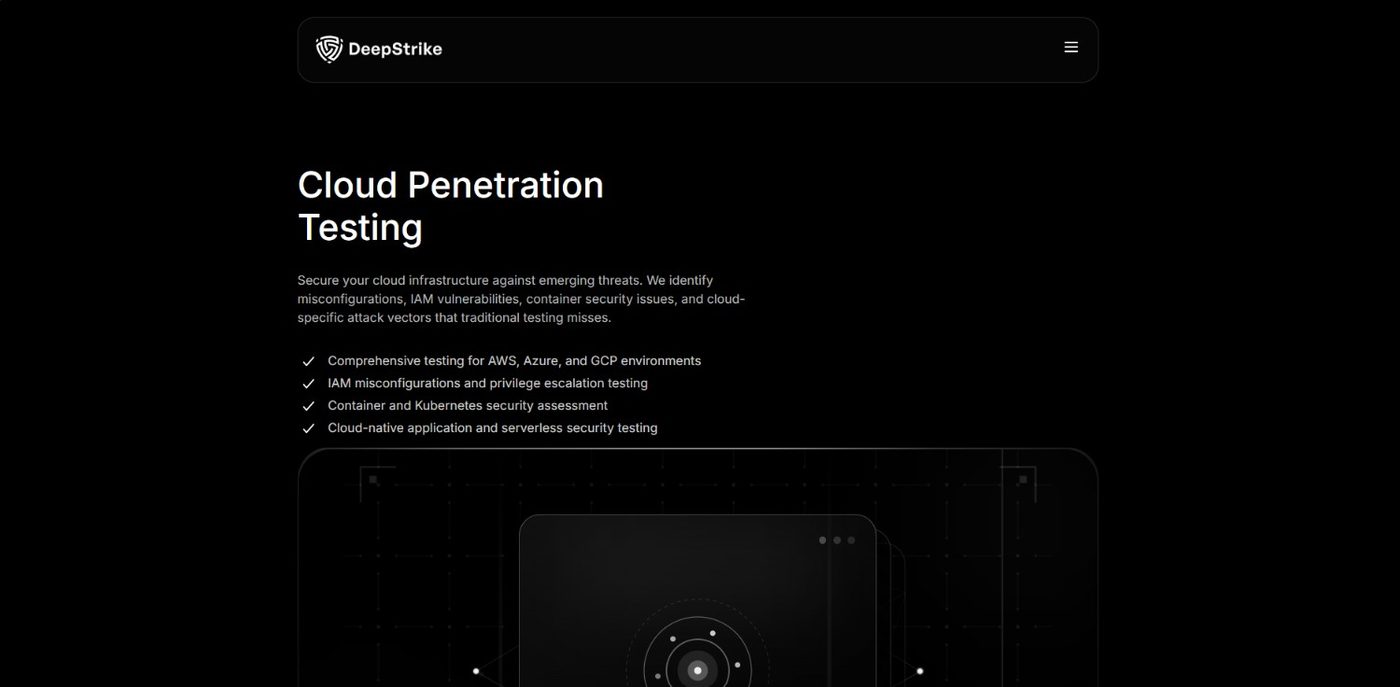
DeepStrike offers a wide gamut of manual cloud penetration testing and PTaaS across AWS, Azure, GCP, and Kubernetes, and the testing scope includes IAM, privilege escalation, containers, serverless, cloud APIs, and attack-path validation.
Key USPs of DeepStrike:
- Covers AWS, Azure, GCP and Kubernetes within one service
- Tests IAM, APIs, serverless, and cloud workload paths
- Offers PTaaS with remediation tracking and retesting
- Supports multiple security-testing categories beyond cloud
Why Choose DeepStrike:
It’s relevant for buyers looking for an engagement that combines cloud-specific testing with an ongoing platform workflow.
11. TrustedSec
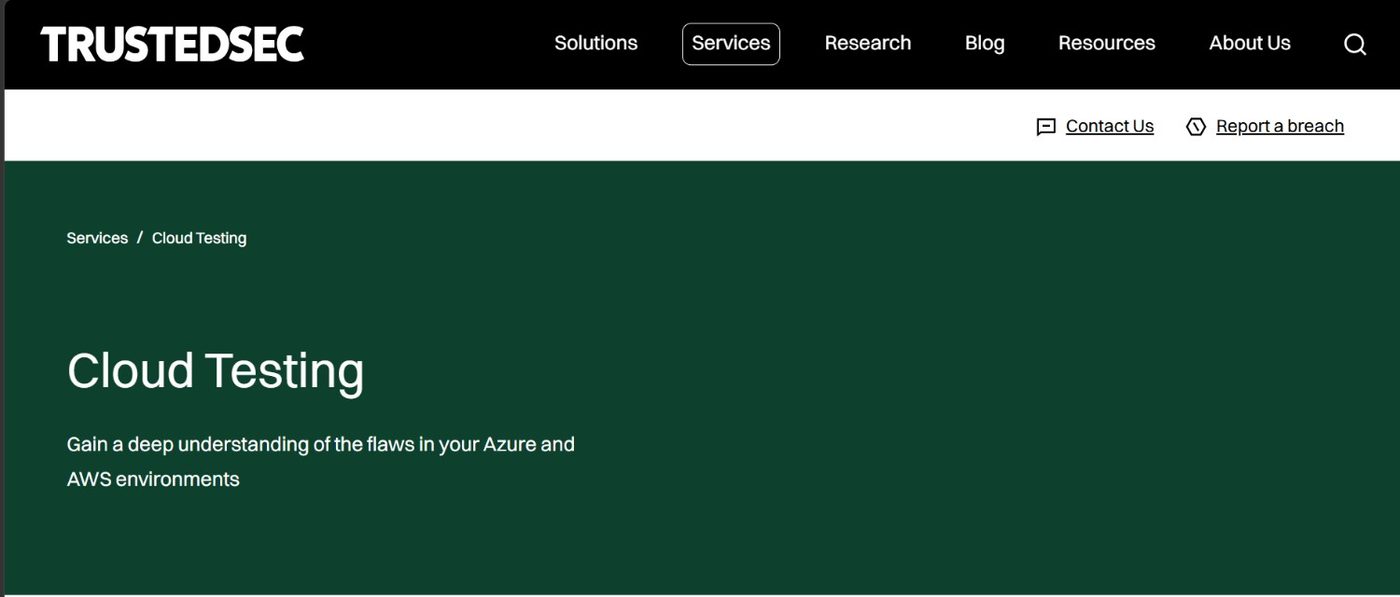
TrustedSec is an offensive-security specialist offering manual cloud penetration testing, red teaming, and security assessments. Its cloud testing focuses on AWS and Azure and uses an Assumed Access Model to identify realistic attack paths and privilege-escalation opportunities.
GCP, Alibaba Cloud, and Oracle Cloud expertise is also offered in its broader cloud hardening/security services.
Key USPs of TrustedSec:
- Strong offensive-security research culture
- Strong identity and privilege-abuse expertise across Azure/Entra ID and AWS
- Cloud attack-path identification and chained exploitation
Why Choose TrustedSec:
Go for TrustedSec if you are looking for deep, human-led offensive testing rather than automated cloud vulnerability scanning. It is best for specialized, research-driven manual consulting and particularly suitable for large and complex enterprise environments.
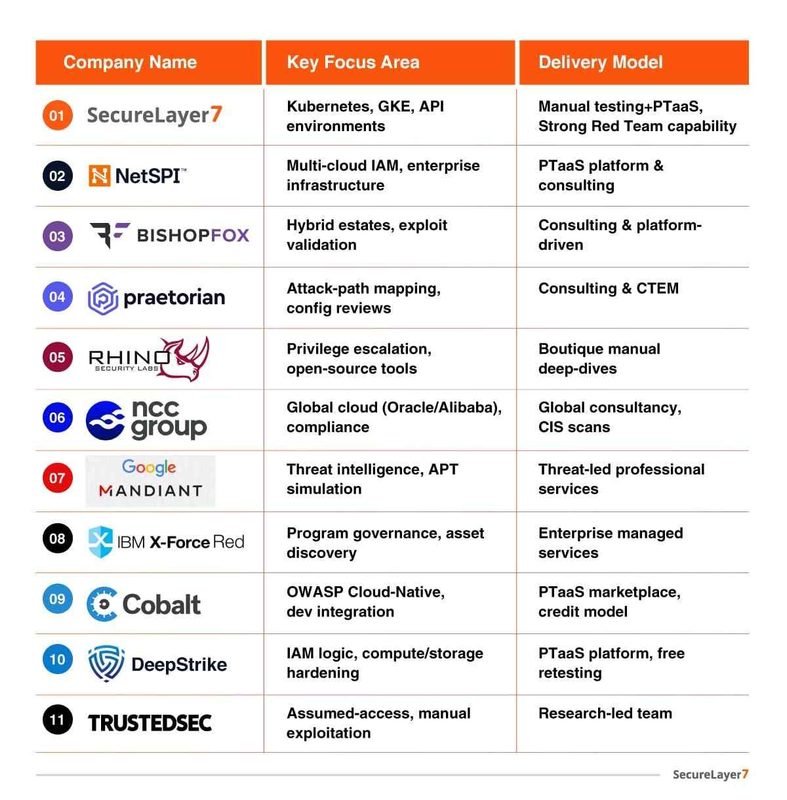
How We Selected These Companies: Key Parameters
To identify the top cloud penetration testing providers, we evaluated different cloud security testing providers on multiple parameters, such as technical depth, cloud coverage, regulatory coverage, and operational execution. These parameters are given below: :
- Cloud Platform Coverage: Architecture depth across AWS, Microsoft Azure, and Google Cloud Platform (GCP), especially in the complex multi-cloud and hybrid environments.
- Control-Plane Penetration Testing: Hands-on exploitation of cloud identity and infrastructure with focus on IAM privilege escalation, and API vulnerabilities.
- Cloud-Native & Container Security: Assessment of modern workloads, including Kubernetes RBAC misconfigurations, container breakout scenarios, serverless execution flaws, and CI/CD pipeline risks.
- Certifications & Accreditations: Company-level trust signals (CREST, ISO 27001, SOC 2 Type II) alongside recognized senior tester credentials (OSCP, AWS/Azure Security Specialties).
- Technical Depth & Adversary Simulation: Practical chaining of misconfigurations into demonstrable business impact, lateral movement, and red teaming rather than relying solely on automated CSPM scanners.
- Enterprise Fit & Scope: Strong compliance capability, such as FedRAMP, HIPAA, or PCI-DSS.
- Reporting, Remediation & Retesting: Clear proof-of-exploit reporting, developer workflow integrations (Jira, GitHub), and verified post-remediation retesting.
Final Thoughts
The providers on this list take different approaches, and you should choose based on the depth of testing, cloud platforms supported, attack-path validation, and remediation capabilities your organization needs.
Looking to strengthen your security posture? SecureLayer7 helps organizations identify vulnerabilities, reduce risk, and defend against evolving cyber threats. Contact our experts to get started.
Frequently Asked Questions ( FAQs)
Cloud pentesting providers come in different types; some focus on enterprise and compliance, while others focus on cloud-native tools for deep manual research. SecureLayer7 focuses more on manual pentesting, while other vendors may take a more tool-oriented approach. The right choice depends on your preferences and security needs.
Cloud-native security providers primarily focus on Identity and Access Management (IAM) misconfigurations, container environments such as Kubernetes, and serverless flaws. Traditional firms often focus on unpatched software, while cloud-native providers assess complex architectural permissions and security weaknesses unique to modern cloud environments.
