
As organizations release software more frequently and add new applications, APIs, cloud services, and AI systems, their attack surfaces change quickly. Traditional penetration tests performed once or twice a year may not always keep pace with these changes. Penetration Testing as a Service (PTaaS) offers a more flexible approach by combining expert-led security testing with a platform for scheduling tests, reviewing findings, communicating with testers, tracking remediation, and retesting fixes.
PTaaS providers take different approaches to security testing. Some rely on dedicated penetration testers, while others use crowdsourced security researchers or combine human testing with automated security validation. Choosing the right provider requires more than comparing brand recognition. Organizations should look at testing methodology, tester expertise, security coverage, platform features, reporting, integrations, remediation support, retesting options, scalability, compliance needs, and how well the service fits their security program.
How We Evaluated PTaaS Providers
No single PTaaS platform works best for every organization. A fast-growing SaaS company may prioritize quick test scheduling and DevSecOps integrations, while a large enterprise may need broader testing coverage, support for complex infrastructure, and compliance-focused reporting.
Instead of relying on brand recognition or rankings alone, organizations should compare PTaaS providers using consistent criteria that reflect their security needs, technical environment, and testing requirements.
The key evaluation parameters include:
- Testing methodology: Depth of manual testing, automation, exploit validation, and adversarial testing.
- Tester expertise: Experience, technical specialization, certifications, and researcher vetting.
- Testing coverage: Support for web applications, APIs, mobile applications, networks, cloud environments, containers, AI systems, and other attack surfaces.
- Platform capabilities: Dashboards, vulnerability management, collaboration, scheduling, evidence, and remediation tracking.
- Reporting quality: Technical findings, proof-of-concept evidence, business impact, remediation guidance, and executive reporting.
- Retesting: Ability to validate remediation and track findings through closure.
- Integrations: Connections with development, ticketing, collaboration, and security workflows.
- Testing cadence: Support for point-in-time, recurring, release-based, or continuous testing.
- Compliance support: Reporting and testing capabilities relevant to security assurance and regulatory requirements.
- Scalability: Ability to support multiple applications, teams, environments, and concurrent assessments.
- Engagement model: Dedicated testers, in-house teams, vetted researcher communities, or automated validation.
- Overall value and organizational fit: Alignment between technical depth, delivery model, security requirements, and organizational resources.
Best PTaaS Platforms and Security Testing Providers in 2026
The best Penetration Testing as a Service (PTaaS) platforms combine expert-led testing with technology that makes it easier to schedule assessments, review findings, track remediation, and retest fixes. The right platform depends on your testing scope, access to skilled testers, automation needs, integrations, reporting requirements, compliance obligations, and how often you need security testing.
The following comparison covers 10 notable PTaaS providers in 2026 and highlights how they differ across these areas.
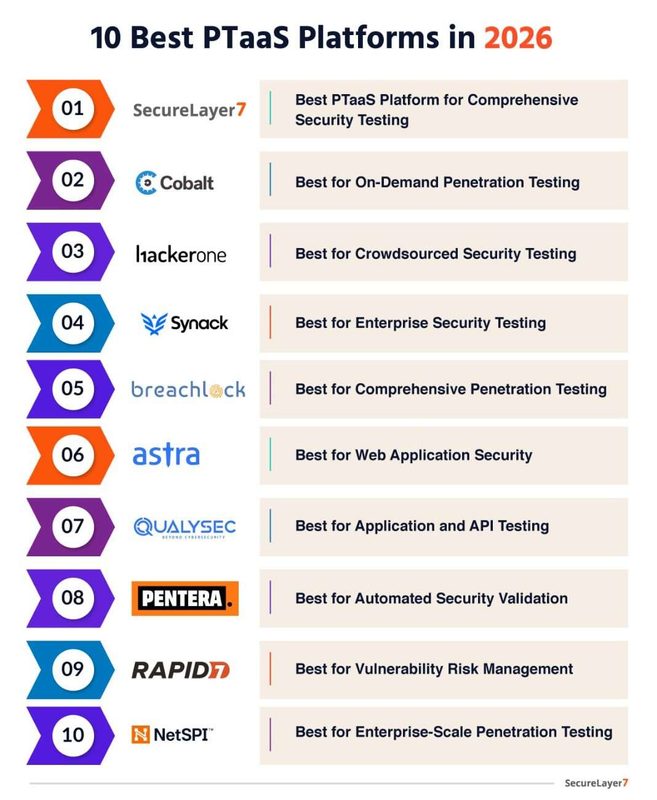
1. SecureLayer7 – Best PTaaS Platform for Comprehensive Security Testing
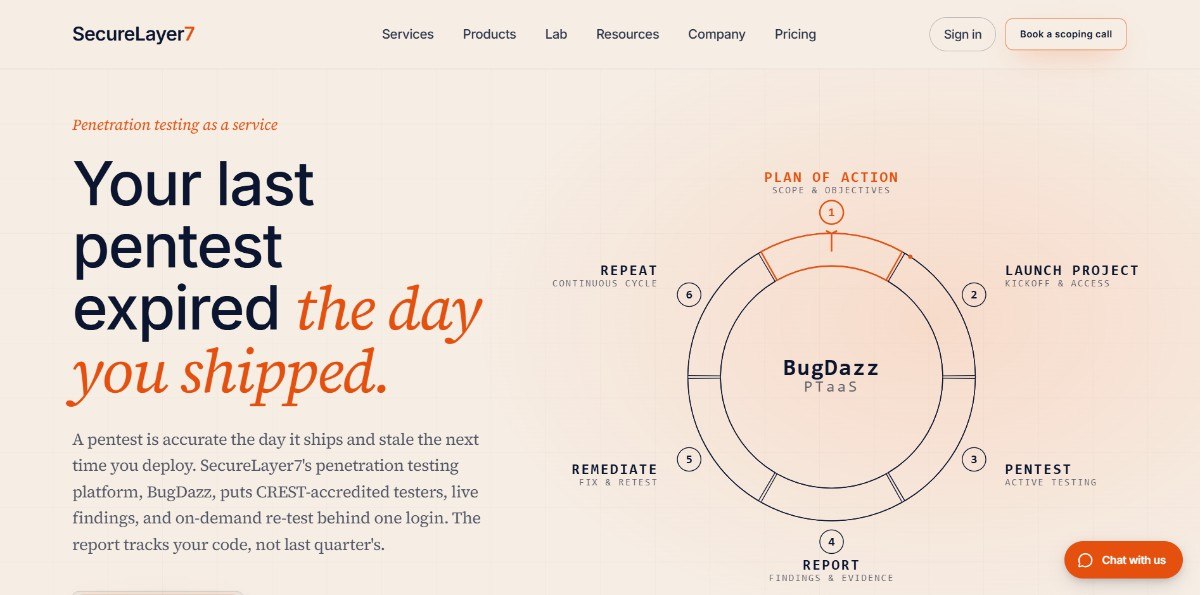
SecureLayer7 provides expert-led penetration testing across applications, APIs, cloud infrastructure, networks, mobile applications, and emerging technologies. Its approach emphasizes manual security testing, proof-of-exploit evidence, actionable reporting, and remediation validation.
Key Features
- Web application penetration testing.
- API security testing.
- Mobile application security testing.
- Cloud and network penetration testing.
- Manual testing with proof-of-exploit evidence.
- Vulnerability reporting and remediation guidance.
- Retesting to validate security fixes.
- Testing across modern and emerging attack surfaces.
Why Choose SecureLayer7?
SecureLayer7 is suited to organizations that need hands-on security testing backed by experienced penetration testers. Its assessments can examine areas such as authentication, authorization, business logic, API abuse, privilege escalation, and attack paths that automated vulnerability scanners may not fully assess.
When evaluating SecureLayer7, organizations should review its testing methodology, tester expertise, scope coverage, sample reports, remediation support, and retesting process. These factors provide a clearer picture of whether the service matches their security requirements than vendor size or market visibility alone.
2. Cobalt – Best for On-Demand Penetration Testing Workflows
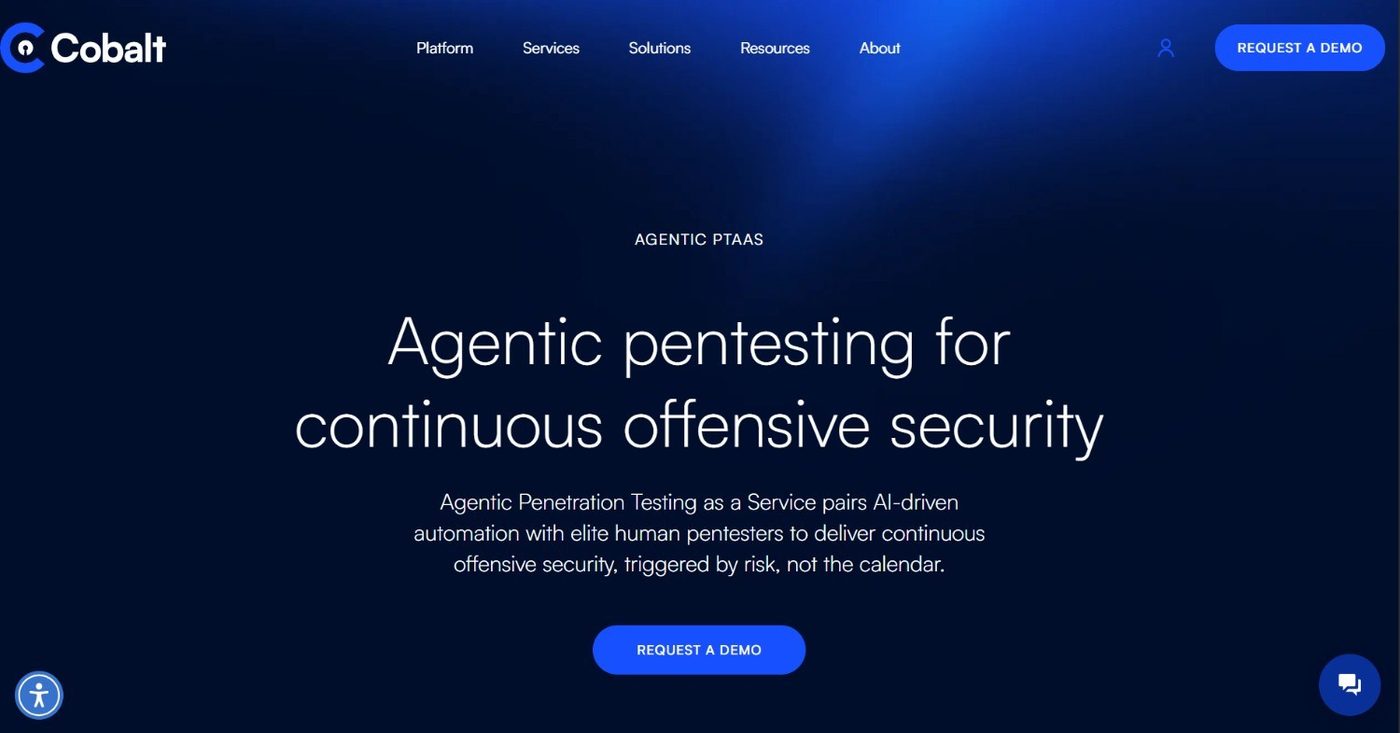
Cobalt combines human-led penetration testing with a platform that helps teams manage assessments from testing through remediation. Its model is designed for organizations that want to fit penetration testing into existing development and security workflows.
Key Features
- Web application penetration testing
- API and mobile application testing
- Network and cloud testing
- AI and LLM application testing
- Centralized security findings
- Direct collaboration with testers
- Remediation workflows
Why Consider Cobalt?
Cobalt is a practical option for organizations that want penetration testing to work alongside their development processes. Security and engineering teams can use the platform to schedule assessments, review findings, communicate with testers, track remediation, and manage retesting without relying on disconnected reports and email threads.
3. HackerOne – Best for Crowdsourced Security Expertise

HackerOne connects organizations with a global community of security researchers. In addition to penetration testing, its platform supports bug bounty and vulnerability disclosure programs, giving organizations several ways to identify and manage security weaknesses.
Key Features
- Penetration testing
- Vetted security researchers
- Crowdsourced security testing
- Bug bounty programs
- Vulnerability disclosure programs
- Vulnerability management workflows
Why Consider HackerOne?
HackerOne is worth considering for organizations that want structured penetration testing with access to a larger security researcher community. It can also suit teams that want to supplement scheduled penetration tests with bug bounty or vulnerability disclosure programs.
4. Synack – Best for Large and Complex Enterprise Environments
Synack combines human security researchers with a centralized testing platform and technology-assisted security testing. Its services cover web applications, APIs, mobile applications, cloud environments, and infrastructure.
Key Features
- Web, mobile, API, and infrastructure testing
- Vetted security researcher community
- Human-led security testing
- Technology-assisted testing
- Vulnerability management
- Ongoing security testing options
Why Consider Synack?
Synack is designed for enterprises that need to manage security testing across multiple applications, systems, and environments. Its vetted researcher community provides human testing expertise, while the platform gives security teams a central place to manage findings and testing activity across a large attack surface.
5. BreachLock – Best for Broad PTaaS Coverage
BreachLock provides penetration testing through a centralized platform, with coverage across applications, APIs, networks, cloud environments, mobile applications, IoT systems, containers, DevOps environments, and newer technologies such as LLM applications.
Key Features
- Web application penetration testing
- API penetration testing
- Network and cloud testing
- Mobile and IoT testing
- Kubernetes and container testing
- LLM penetration testing
- Remediation workflows
- Retesting
Why Consider BreachLock?
BreachLock can suit organizations that need several types of penetration testing from one provider. Its broad testing scope is particularly useful for businesses managing a mix of applications, cloud infrastructure, APIs, containers, and other technologies.
6. Astra Security – Best for Application-Focused Security Testing
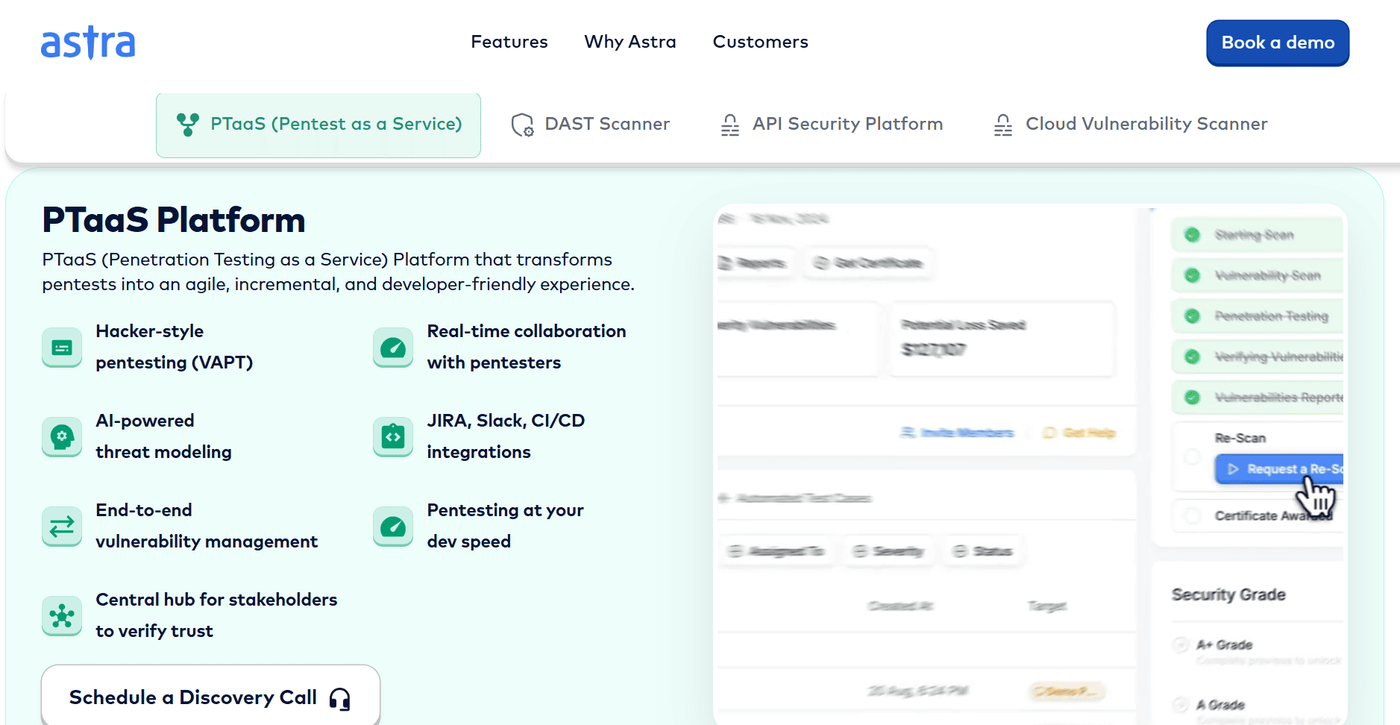
Astra Security focuses on vulnerability assessment and penetration testing for websites, web applications, APIs, and other internet-facing assets. Its approach combines automated vulnerability scanning with manual security testing.
Key Features
- Web application penetration testing
- API security testing
- Vulnerability scanning
- Manual security testing
- Vulnerability reporting
- Remediation support
Why Consider Astra Security?
Astra Security can be a good fit for organizations whose main security concerns involve websites, web applications, and APIs. The combination of vulnerability scanning and manual penetration testing helps teams identify common security issues while also investigating weaknesses that require human analysis.
7. Qualysec – Best for Application, API, and Emerging Technology Testing
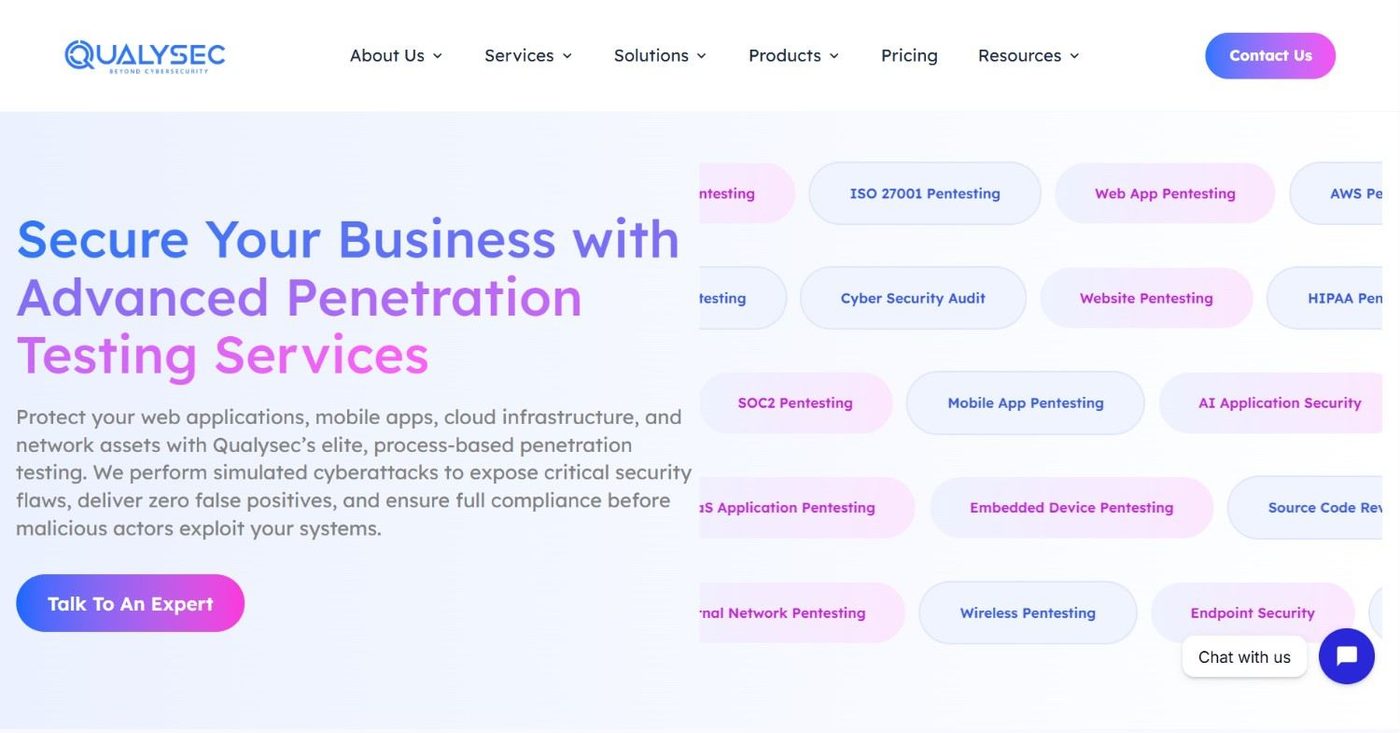
Qualysec provides penetration testing for web and mobile applications, APIs, networks, cloud environments, and AI and LLM applications. This range allows organizations to assess both established technology stacks and newer AI-based systems.
Key Features
- Web application penetration testing
- API penetration testing
- Mobile application testing
- Cloud penetration testing
- Network penetration testing
- AI and LLM penetration testing
- Remediation testing
Why Consider Qualysec?
Qualysec may suit organizations that need application and infrastructure testing alongside assessments for AI and LLM applications. Its coverage makes it relevant for teams managing a mix of traditional systems and newer AI-based technologies.
8. Pentera – Best for Automated Security Validation
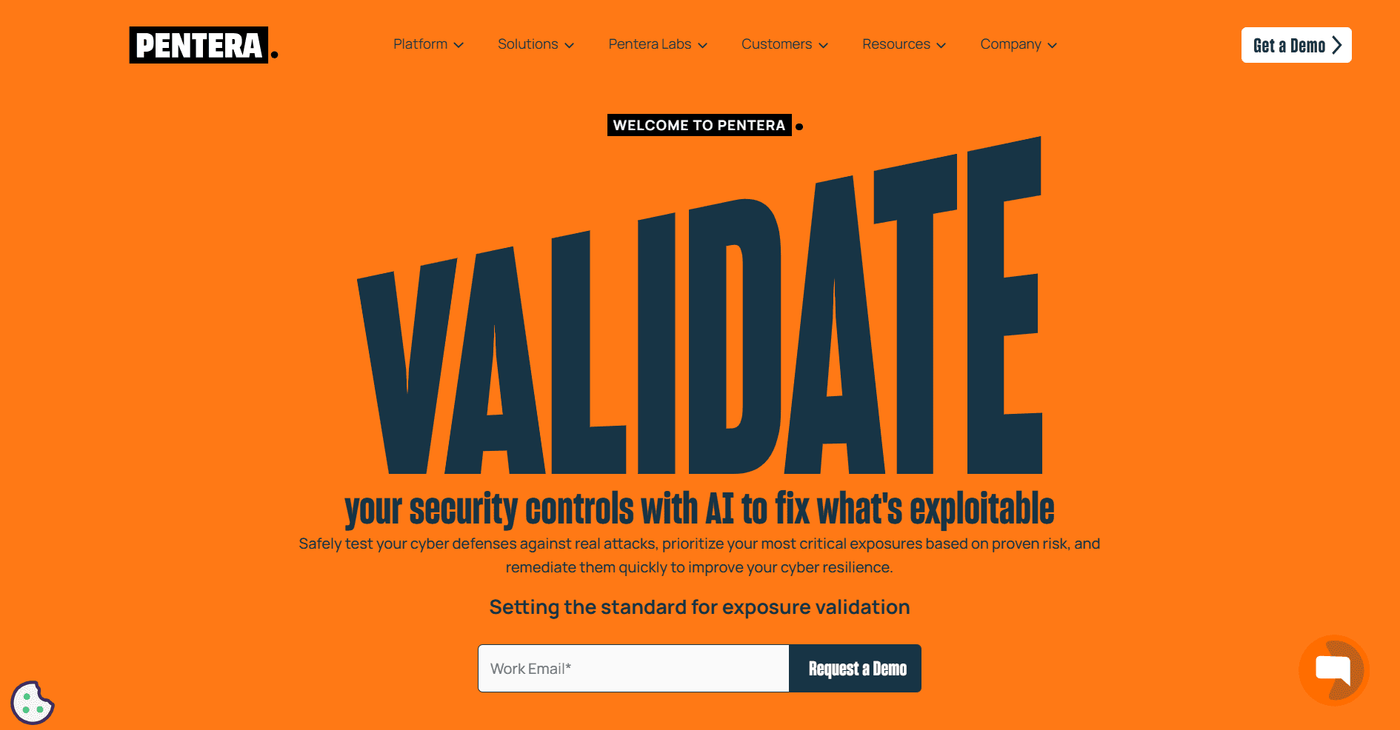
Pentera takes a different approach from traditional consultant-led penetration testing. Its platform automates security validation by emulating attacker behavior across internal, external, and cloud environments to identify exposures that can be exploited.
Key Features
- Automated security validation
- Adversarial attack simulation
- Internal and external environment testing
- Cloud security validation
- Risk-based prioritization
Why Consider Pentera?
Pentera is better suited to organizations that want repeatable, automated security validation rather than relying only on scheduled manual penetration tests. Its platform helps security teams test attack scenarios, identify exploitable weaknesses, and prioritize exposures based on demonstrated risk.
9. Rapid7 – Best for Vulnerability Risk Management
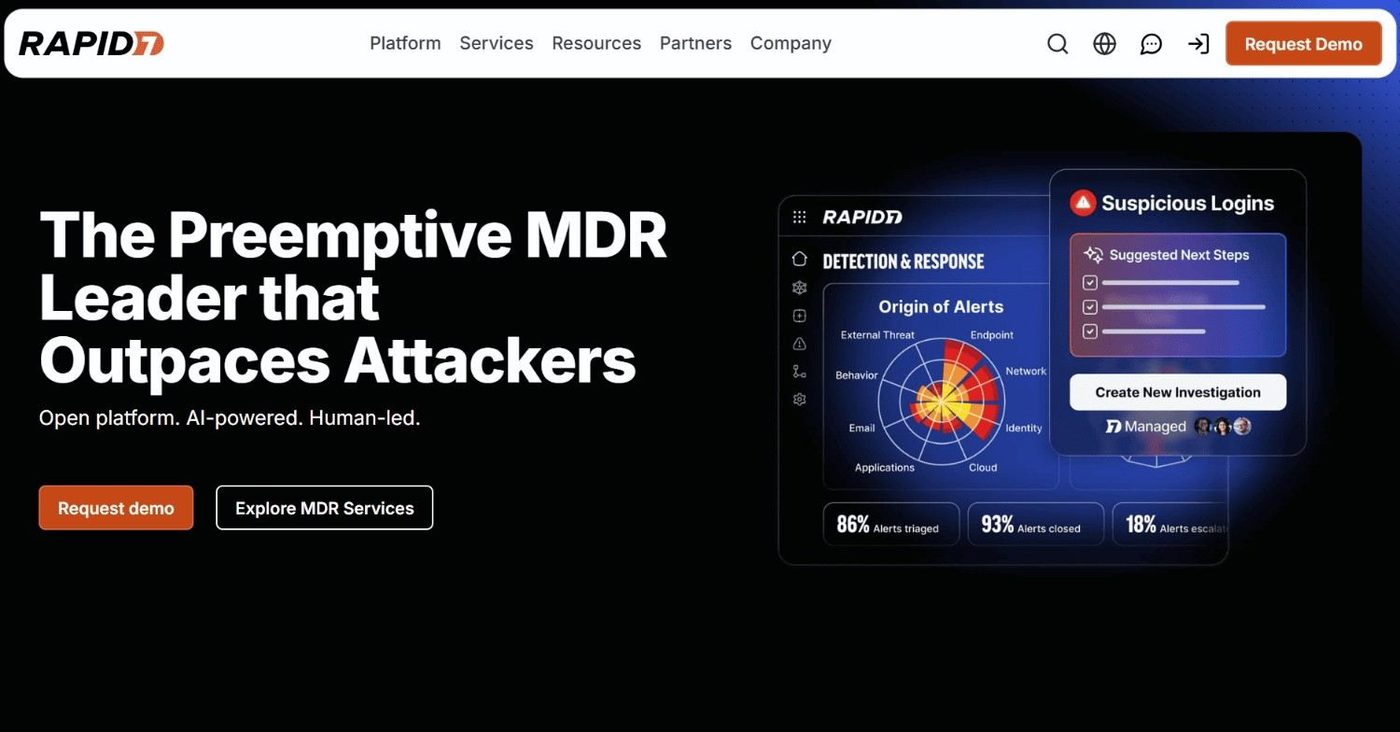
Rapid7 provides penetration testing as part of a broader portfolio of exposure management and security services. Its testing services cover networks, web and mobile applications, wireless environments, IoT devices, social engineering, and red team engagements.
Key Features
- Network penetration testing
- Web application testing
- Mobile application testing
- Wireless and IoT testing
- Social engineering assessments
- Red team engagements
Why Consider Rapid7?
Rapid7 can suit organizations that want penetration testing alongside vulnerability management and other security capabilities. This makes it relevant for teams looking to connect penetration test findings with a broader program for identifying, prioritizing, and managing security exposure.
10. NetSPI – Best for Enterprise-Scale Penetration Testing
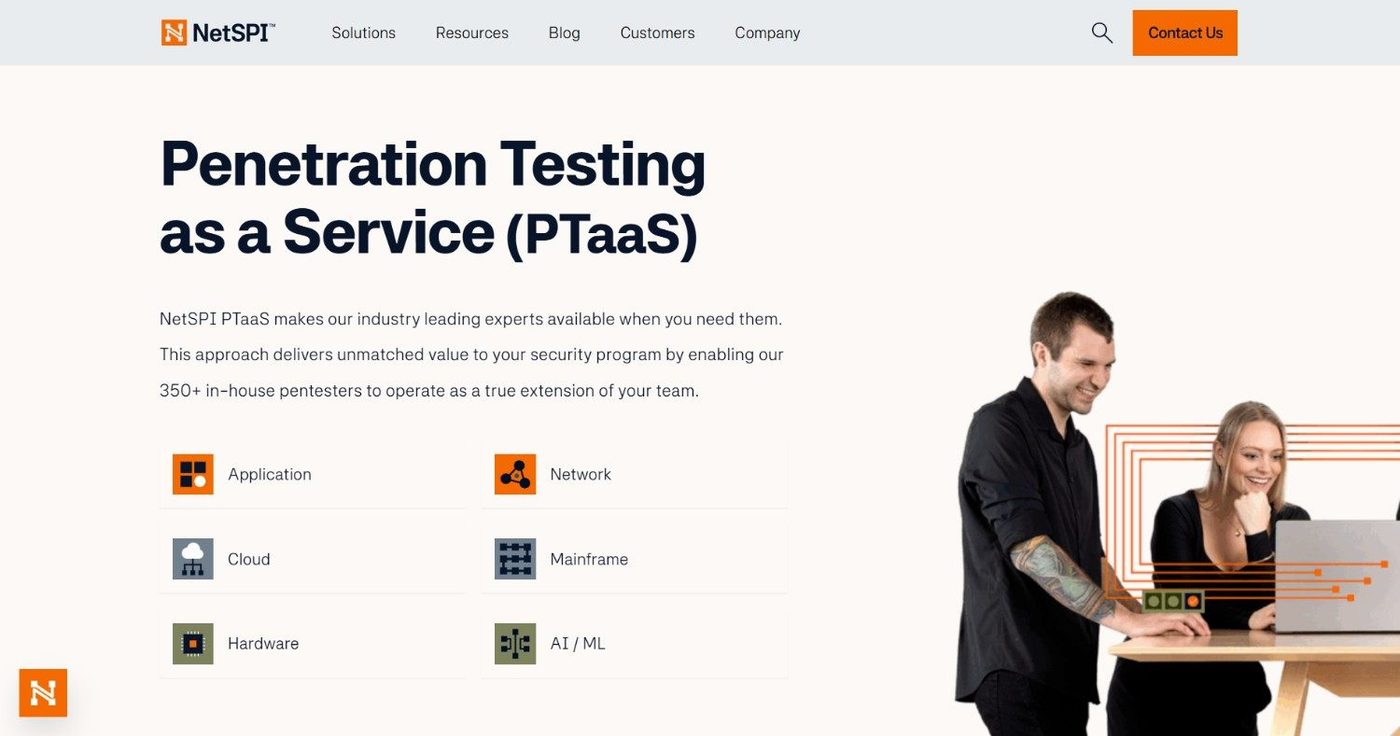
NetSPI provides Penetration Testing as a Service (PTaaS) that combines expert-led security testing with a centralized platform for managing assessments, findings, remediation, and retesting. Its penetration testing services cover applications, APIs, networks, cloud environments, mobile applications, AI and ML systems, and other complex attack surfaces.
Key Features
- Web and application penetration testing
- API and mobile application testing
- Network penetration testing
- Cloud security testing
- AI and ML penetration testing
- Real-time vulnerability findings and dashboards
- Remediation tracking and validation
- Continuous and point-in-time penetration testing
Why Consider NetSPI?
NetSPI can suit enterprises that need to manage penetration testing across a large and diverse technology environment. Its combination of experienced security testers and a centralized PTaaS platform helps teams manage testing programs, review findings in real time, prioritize vulnerabilities, coordinate remediation, and validate security fixes.
How to Choose the Right PTaaS Platform
Selecting a Penetration Testing as a Service (PTaaS) platform requires more than comparing features or vendor rankings. Providers differ in how they conduct tests, the expertise of their testers, the technologies they cover, and how testing fits into development and security workflows.
The right choice should match your organization’s applications and infrastructure, testing frequency, compliance requirements, remediation process, and available security resources. Use the following four steps to compare PTaaS providers and identify the one that best fits your security program.
Define Security Testing Requirements
Before evaluating specific vendors, clearly outline what you need to test and why.
Consider:
- Web, API, mobile, cloud, network, container, or AI testing requirements
- Number and complexity of assets
- Release frequency
- Regulatory and compliance requirements
- Internal security resources
- Required testing frequency
- Budget and procurement constraints
Evaluate Testing Methodologies
Determine how the provider balances automation with human expertise. Automated tools can identify known vulnerabilities across large environments, but manual penetration testing is better suited to finding issues that require context and judgment, such as business logic flaws, authorization weaknesses, privilege escalation, and multi-step attack paths.
Also consider who performs the testing. Depending on the provider, assessments may be handled by dedicated penetration testers, an internal security team, or a crowdsourced community of security researchers. The right model depends on the level of expertise, consistency, and testing depth your organization requires.
Review Reporting and Deliverables
A penetration test creates greater value when findings can be understood and acted upon.
Look for reports that provide:
- Clear vulnerability descriptions
- Severity and risk context
- Proof-of-concept or exploit evidence
- Affected assets
- Business and technical impact
- Reproduction information where appropriate
- Actionable remediation guidance
Assess Platform and Developer Integrations
Evaluating the PTaaS platform fits existing security and development processes.
Useful capabilities may include:
- Vulnerability dashboards
- Tester collaboration
- Jira or ticketing integrations
- GitHub and GitLab workflows
- CI/CD integrations
- Notifications and collaboration integrations
- Remediation tracking
- Retesting workflows
Understand Retesting and Remediation Support
Finding vulnerabilities is only part of the penetration testing lifecycle.
Determine how the provider handles remediation questions, tester communication, fix validation, retesting, reopened findings, and final reports. These capabilities become increasingly important when penetration testing is performed regularly.
Consider Scalability and Testing Cadence
A provider that works well for one application may not necessarily support dozens of simultaneous assessments across global teams.
Organizations should determine whether the provider can support:
- Multiple concurrent engagements
- Recurring testing
- Release-driven assessments
- Multiple business units
- Distributed development teams
- Large application portfolios
Conclusion
Penetration Testing as a Service (PTaaS) helps organizations move beyond traditional point-in-time testing by combining expert security testing, automation, centralized visibility, faster remediation, and continuous security validation. The right PTaaS provider depends on your application landscape, testing requirements, technology stack, compliance needs, testing methodology, and required level of security expertise.
SecureLayer7 helps organizations strengthen their security posture with comprehensive penetration testing as a service solution across web applications, APIs, mobile applications, cloud environments, networks, and emerging technologies.
Connect with SecureLayer7’s security experts to discuss your penetration testing requirements.
Frequently Asked Questions (FAQs)
PTaaS combines expert-led penetration testing with cloud platforms, automation, centralized reporting, remediation tracking, and retesting for more frequent security testing.
Leading PTaaS platforms in 2026 include SecureLayer7, HackerOne, Cobalt, Synack, Pentera, Rapid7, BreachLock, Astra Security, NetSPI, and Qualysec. The best choice depends on testing coverage, expertise, integrations, compliance, and budget.
Traditional penetration testing is typically point-in-time, while PTaaS supports more frequent testing, centralized findings, collaboration, remediation tracking, and retesting.
Depending on the provider, PTaaS may include web application, API, mobile, cloud, and network penetration testing.
Evaluate testing expertise, methodology, coverage, platform capabilities, reporting, integrations, retesting, compliance support, scalability, and pricing.

