


Threat intelligence tools are essential resources for modern cybersecurity, offering the ability to gather, analyze, and respond to potential threats before they can impact your organization. These tools provide actionable insights into emerging threats, vulnerabilities, and attack patterns, enabling you to stay ahead of cybercriminals.
By integrating threat intelligence tools into your security infrastructure, you can enhance threat detection, streamline incident response, and improve overall security posture.
What Are Threat Intelligence Tools?
Threat intelligence tools are specialized software and platforms designed to collect, process, and analyze data related to potential and existing cyber threats. These tools aggregate information from various sources, including open-source data, proprietary databases, and dark web monitoring, to provide actionable insights into the tactics, techniques, and procedures (TTPs) used by cyber adversaries.
These different types of threat intelligence tools gather, analyze, and organize data from multiple sources to provide actionable insights into potential security risks.
Their primary purpose is to help organizations identify, understand, and mitigate potential security threats before they can cause significant harm.
List of 10 Best Threat Intelligence Tools
Threat intelligence tools are essential for businesses and organizations to stay ahead of cyber threats and attacks. Following is the carefully curated list of the top 10 threat intelligence tools.
1. Kaspersky Threat Intelligence
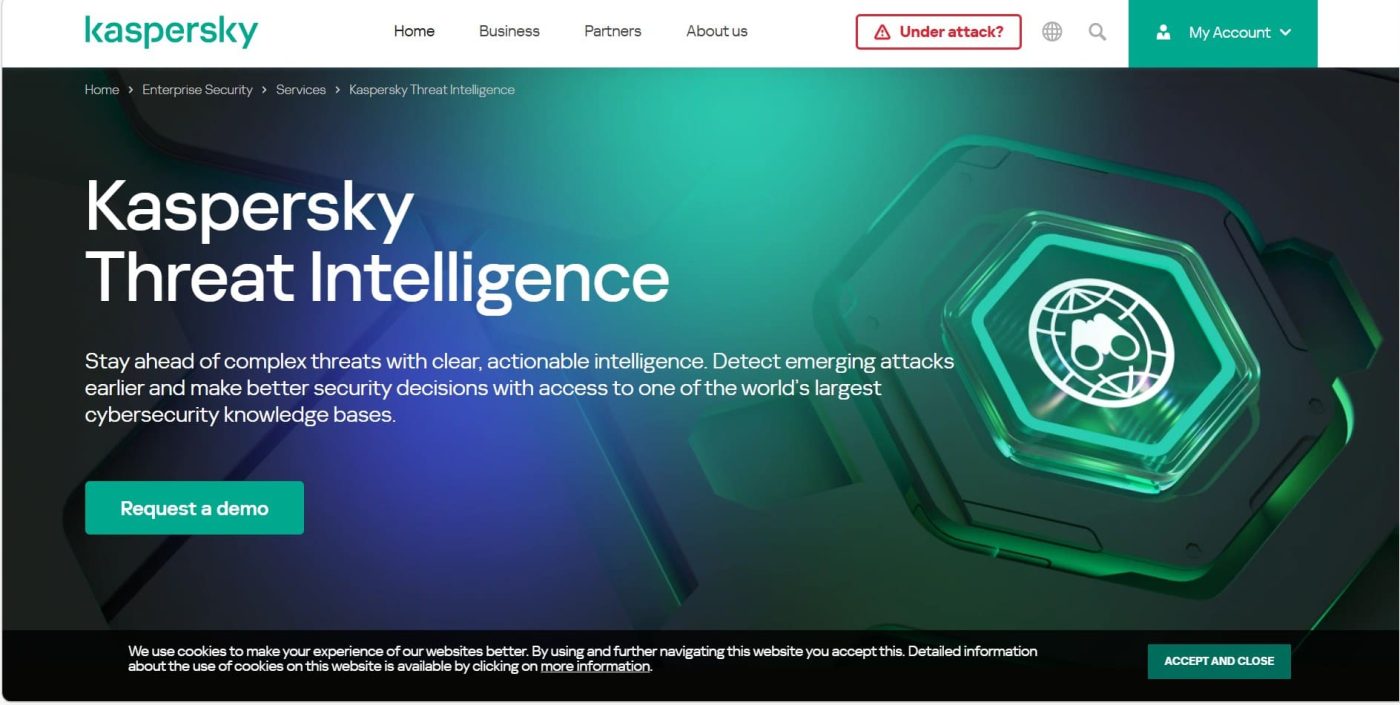
Kaspersky’s threat intelligence is built on extensive global malware telemetry and deep reverse-engineering research. It provides detailed reporting on advanced persistent threats (APTs), exploit chains, infrastructure mapping, and adversary attribution.
Unlike basic IOC feeds, it offers technical context around malware behavior, campaign evolution, and geopolitical threat actors.
This makes it especially useful when responding to sophisticated or targeted attacks where understanding attacker intent and capability shapes containment strategy.
Key Features
- Unified portal access for a single web interface for Threat Lookup, sandbox analysis, and reporting
- Real-time data feeds over 30 machine-readable feeds covering malicious IPs, URLs, and APT indicators
- Digital footprint monitoring to track dark web mentions and leaked credentials to prevent targeted attacks
- Automated threat attribution
- Behavioral sandbox analysis that detonates files to provide detailed reports and full MITRE ATT&CK framework mapping
When to Choose This Tool:
- Suitable for high-risk industries, such as finance, energy, government
- Deep malware analysis and APT tracking
- SOC handles complex, targeted intrusions
- Attribution and geopolitical threat awareness matter to your board
2. Proofpoint Emerging Threat Intelligence
Proofpoint ET Intelligence provides high-fidelity, verified data on malicious infrastructure to block advanced attacks. It delivers hourly-updated reputation feeds covering over 40 threat categories, including botnets and C2 servers.
The platform features the ET Pro Ruleset for precise network detection and a searchable portal for deep forensic investigations. Integrated with Nexus AI, it leverages global email telemetry to identify emerging exploits and prioritize critical vulnerabilities via AI-driven agents for automated defense.
Key Features:
- Advanced protection against phishing, spam, and malware
- Safeguards against cloud-based threats
- Real-time threat intelligence with actionable insights
- Phishing simulation and user training tools
- Incident Response: Rapid incident response capabilities to mitigate threats quickly
When to Choose This Tool:
- Cloud account compromise is a concern and when you are looking for intelligence tied directly to user behavior analytics.
- If you are looking for cloud-specific threats
3. CrowdStrike Falcon Adversary Intelligence
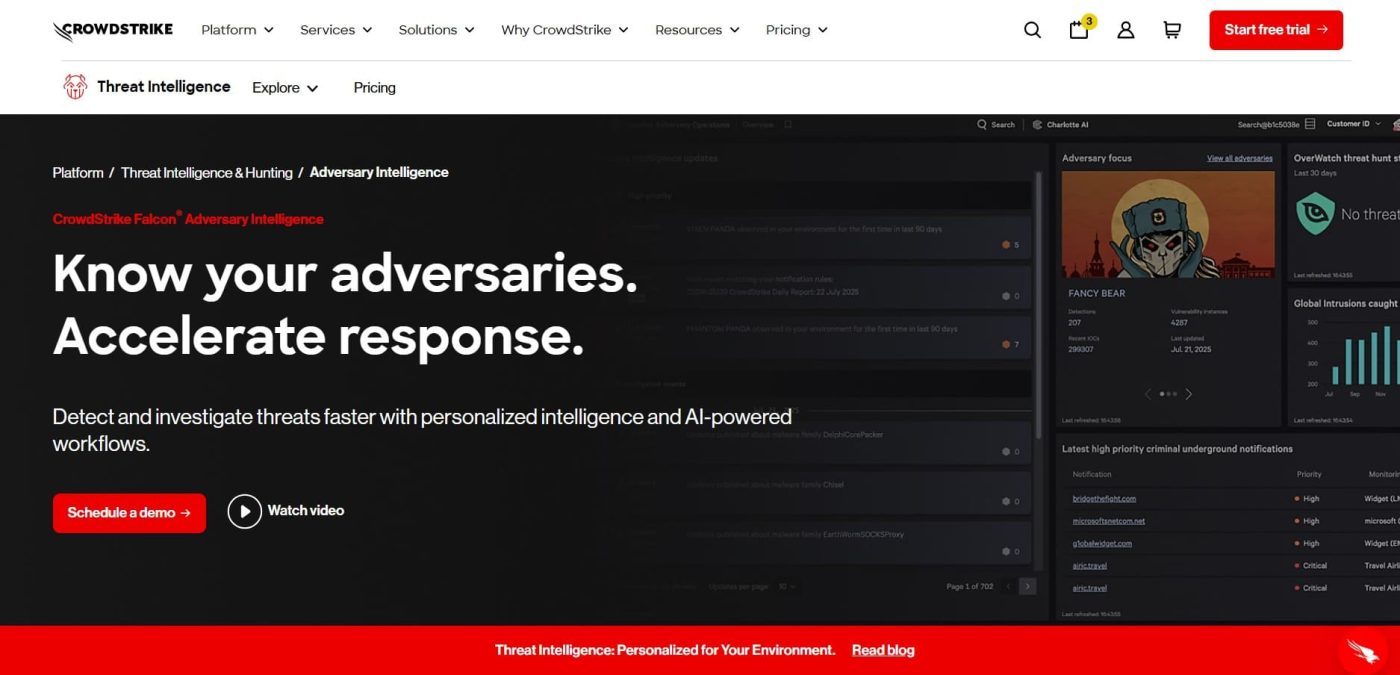
CrowdStrike embeds intelligence directly into its endpoint detection ecosystem. It correlates live endpoint telemetry with known adversary tactics and named threat groups.
When suspicious behavior appears, Falcon determines whether it matches ransomware playbooks, lateral movement techniques, or data exfiltration patterns. This contextualization reduces investigative uncertainty and accelerates containment decisions.
Key Features:
- Comprehensive endpoint protection with real-time threat detection.
- Advanced behavioral analysis to identify suspicious activities
- Utilizes AI and machine learning for proactive threat detection
- Continuous threat hunting to uncover hidden threats
- Easily scalable to meet the needs of organizations of all sizes
When to Choose This Tool:
- If you already use CrowdStrike EDR.
- Endpoint visibility is your top priority.
- Need intelligence automatically applied during detection.
- Prefer integrated platforms over standalone TIPs
4. SolarWinds Security Event Manager
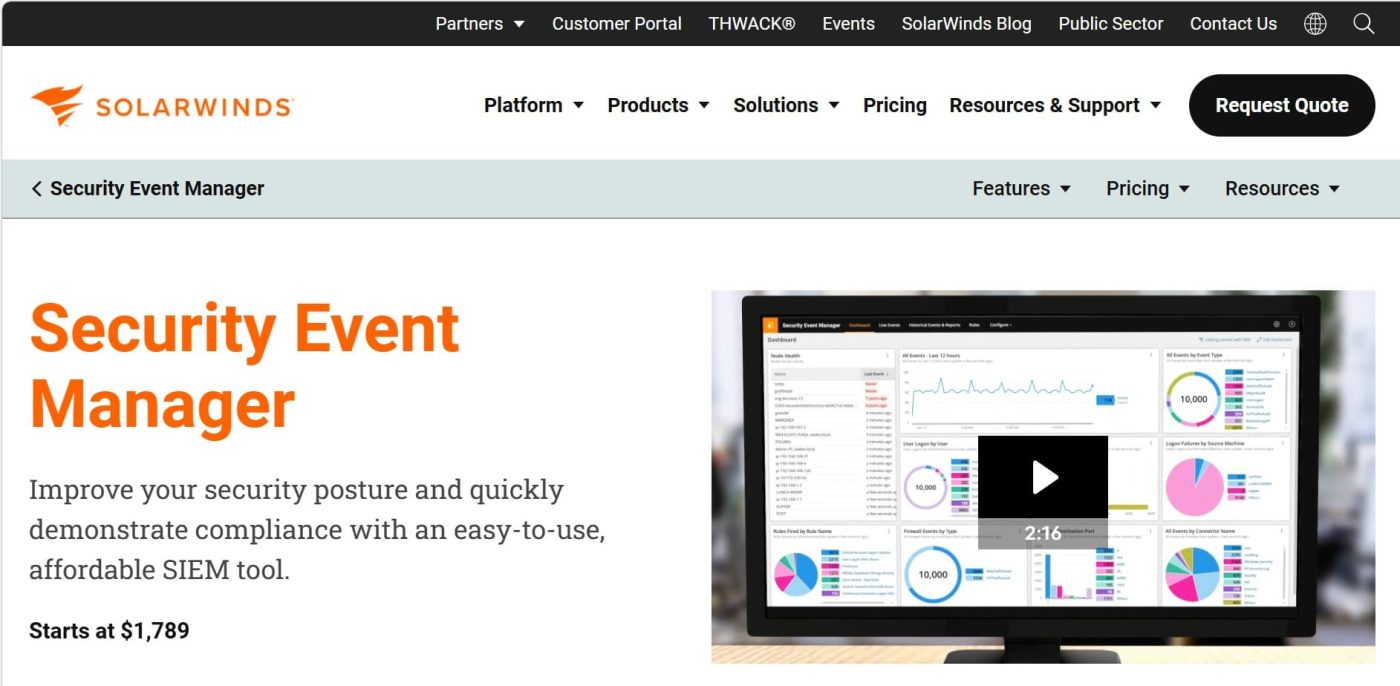
SolarWinds SEM is a SIEM platform that supports threat intelligence enrichment within centralized log monitoring. It helps correlate suspicious IP addresses, domains, and user activity against external threat feeds.
This reduces false positives and strengthens alert validation. Its compliance reporting features also support audit requirements, making it practical for organizations building structured monitoring environments.
Key Features:
- Continuous monitoring and real-time threat detection
- Centralized log management for comprehensive visibility
- Automated threat responses to reduce incident response times
- Built-in compliance reporting to meet regulatory requirements
- Intuitive interface for easy management and analysis
When to Choose This Tool:
- Need centralized log visibility first
- To strengthen SIEM capabilities
- Compliance reporting is important
- Suitable for mid–sized enterprise building SOC foundations
5. Recorded Future
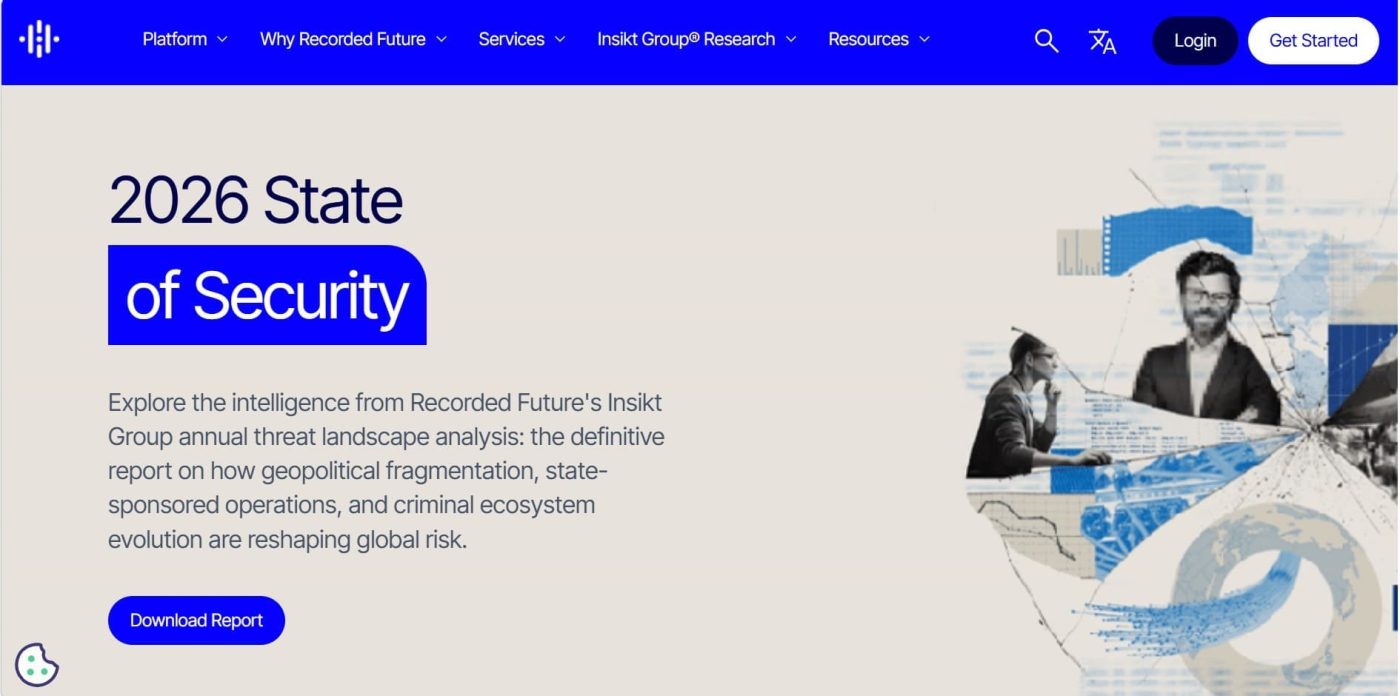
Recorded Future aggregates intelligence from open web, dark web, technical feeds, and underground marketplaces. It provides insight into exploit discussions, ransomware chatter, and vulnerability weaponization timelines.
This allows organizations to prioritize patches based on real-world exploitation risk instead of severity scores alone. It also tracks brand impersonation and leaked credentials, extending visibility beyond internal telemetry.
Key Features:
- Real-time threat intelligence from multiple sources
- Predictive analytics to anticipate future threats
- Easy integration with existing security tools
- Advanced threat hunting capabilities
- Context-rich alerts for better threat understanding
When to Choose This Tool:
- Looking For external threat visibility beyond your network
- Vulnerability prioritization is a challenge
- Third-party and brand risk monitoring is important
- Your organization values strategic intelligence reporting
6. Anomali
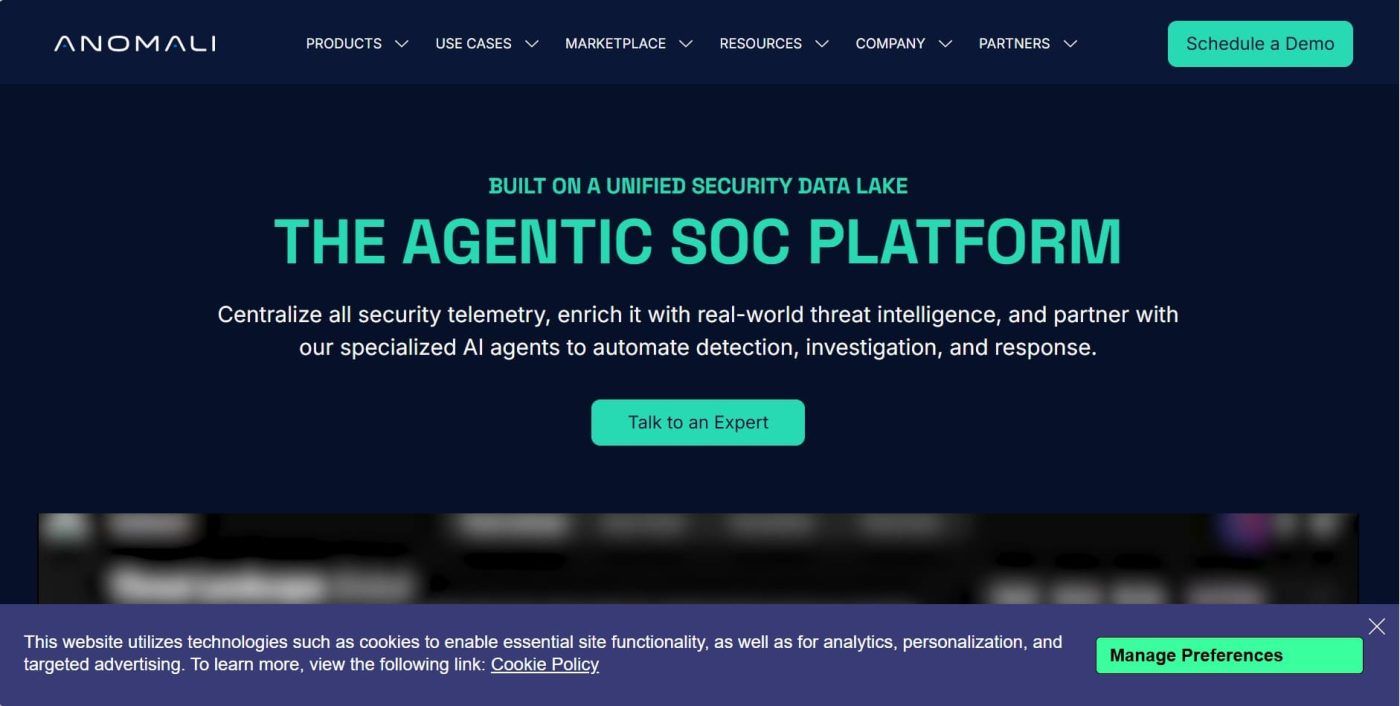
Anomali is a dedicated Threat Intelligence Platform (TIP) that aggregates, normalizes, scores, and distributes intelligence feeds. It centralizes multiple sources and automates enrichment across SIEMs, firewalls, and SOAR tools.
Its scoring engine reduces noise by prioritizing high-confidence indicators. This improves operational efficiency in environments where multiple vendors and feeds create fragmentation.
Key Features:
- Aggregates threat data from multiple sources for comprehensive coverage
- Advanced analytics to identify and understand threats
- Automated threat detection and response
- Seamless integration with existing security tools
- Enables threat sharing within and across organizations
When to Choose This Tool:
- Need to consume multiple intelligence feeds
- Looking for centralized feed management
- Automation and indicator distribution are priorities
- Need SOC scaling and structured intelligence workflows
7. ThreatConnect
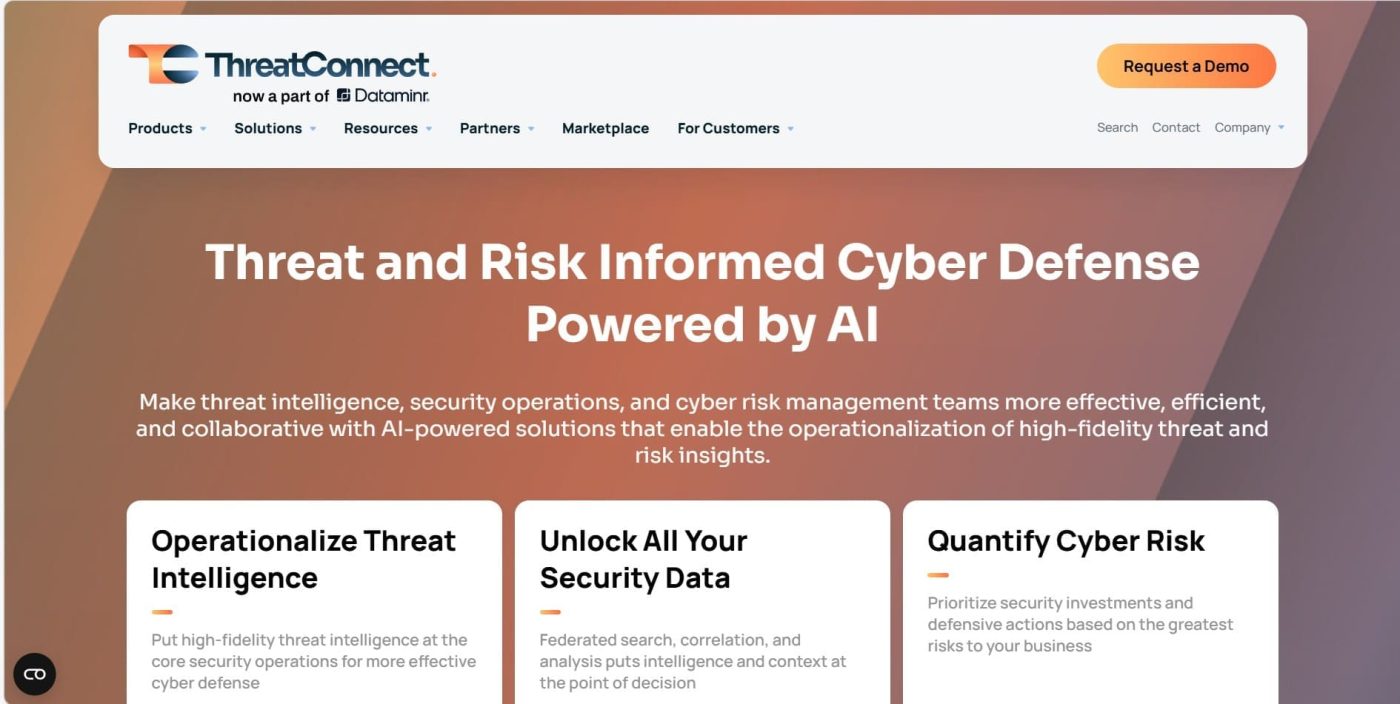
ThreatConnect combines intelligence aggregation with workflow orchestration to link threat indicators to cases, investigations, and response playbooks. This structured approach ensures intelligence supports operational decisions rather than remaining passive data. Analysts can track campaigns, map relationships between indicators, and automate response steps directly within the platform.
Key Features:
- Centralized platform for threat intelligence and incident response
- Advanced threat analysis and contextual insights
- Orchestration and automation of security workflows
- Enables collaboration and information sharing among security teams
- Customizable dashboards for tailored threat views
When to Choose This Tool:
- Looking for intelligence integrated into case management
- For structured investigation processes
- Need automation tied to intelligence lifecycle management
- Collaboration between analysts is critical
8. Bitdefender Intelligence
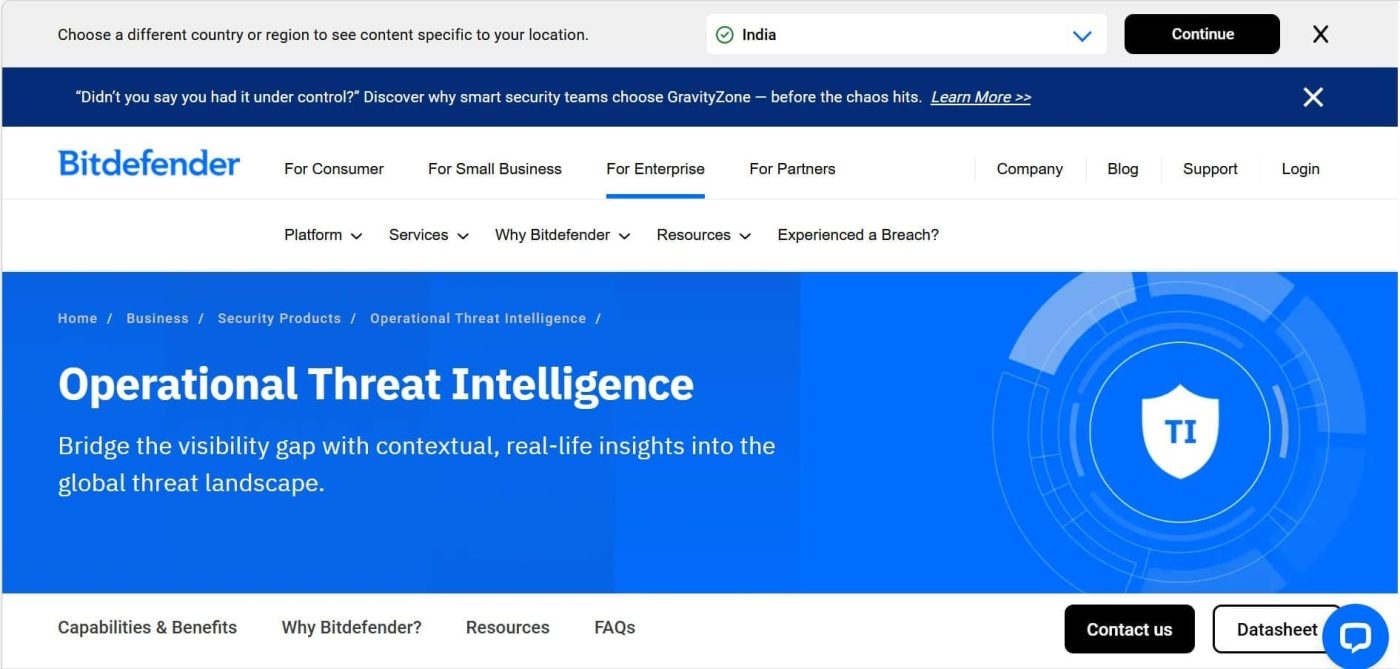
Bitdefender integrates threat intelligence into its endpoint security and behavioral detection systems. It continuously updates malware signatures, behavioral analytics models, and ransomware detection logic. This tight coupling simplifies operations, as intelligence improves protection without requiring separate feed configuration or management overhead.
Key Features:
- Real-time protection against malware, ransomware, and other threats
- Detects and mitigates threats through behavioral analysis
- Uses machine learning to enhance threat detection
- Integrates with existing security infrastructure
- Detailed threat reporting and analysis
When to Choose This Tool:
- Endpoint protection is your primary focus
- Need embedded intelligence without managing a separate TIP
- Smaller team and prefers simplified operations
- Ransomware prevention is a top priority
9. Imperva Application Security
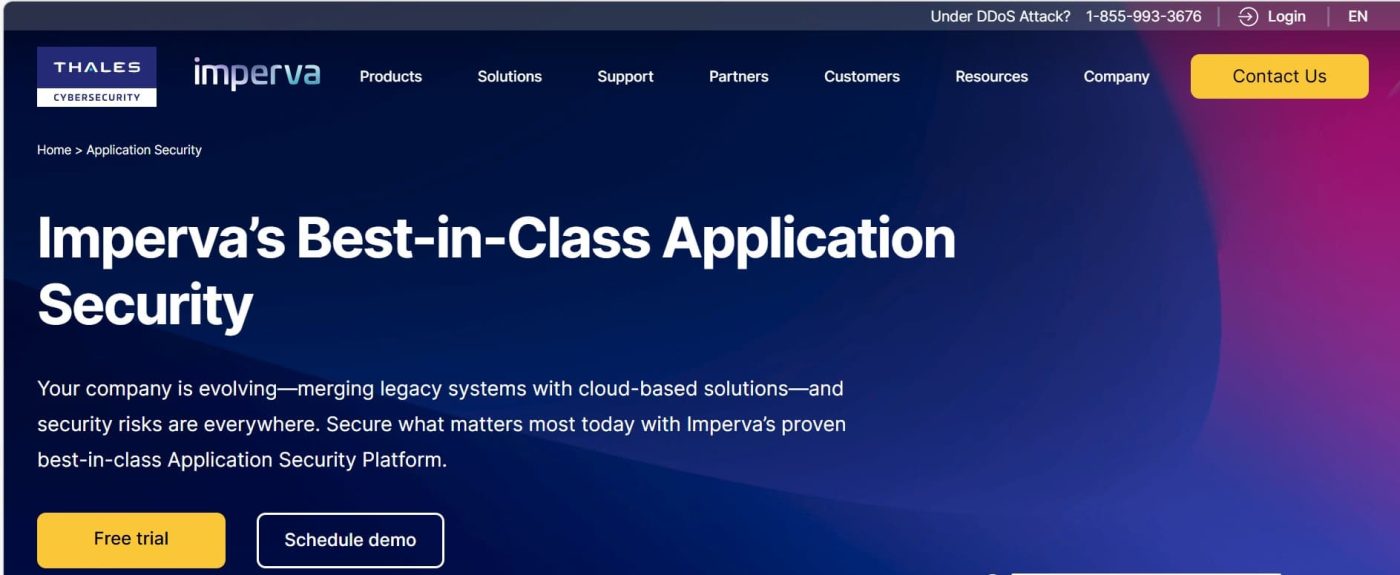
Earlier known as ThreatRadar, Imperva Application Security delivers intelligence specifically for web applications and APIs. It tracks botnets, credential stuffing campaigns, DDoS infrastructure, and API abuse trends. Integrated directly with web application firewalls, the intelligence translates into immediate blocking decisions. This is crucial for businesses heavily dependent on online platforms.
Key Features:
- Protects web applications from various cyber threats
- Multilayered defense against APIs
- Real-time threat intelligence and updates
- Automated threat mitigation to reduce response times
- Incorporates threat feeds from multiple sources
- Allows the creation of custom security policies
When to Choose This Tool:
- For high-traffic web applications
- API abuse and bot attacks are increasing
- Need intelligence embedded in WAF controls
- E-commerce or fintech services drive revenue
10. Authentic8 Silo
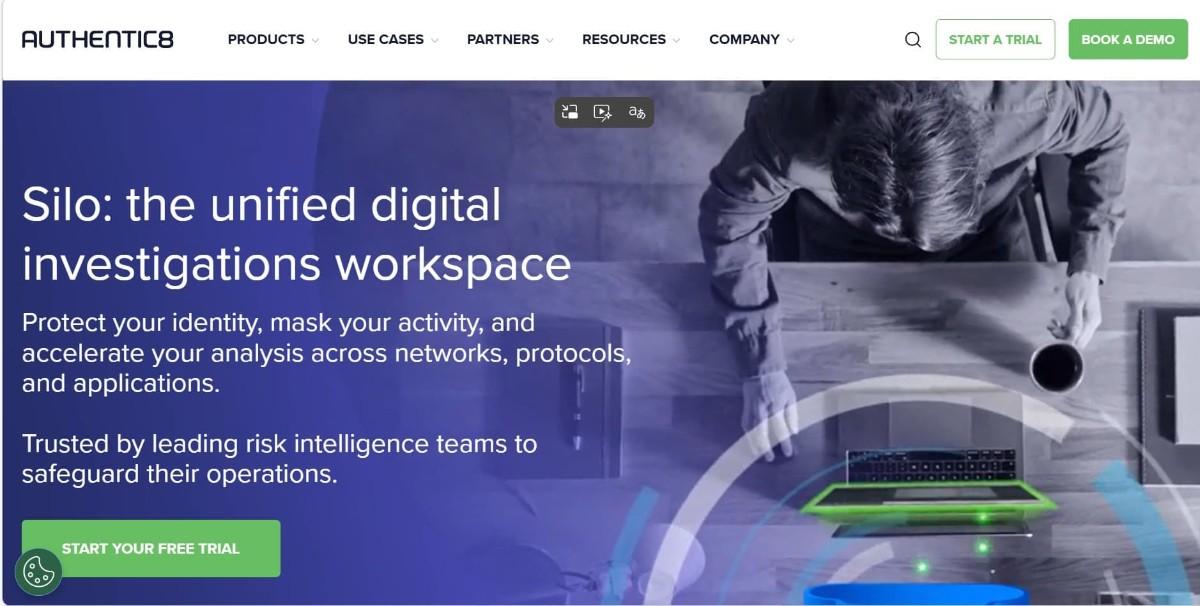
Authentic8 Silo provides browser isolation enhanced by threat intelligence. Web sessions run in a secure cloud environment, preventing malicious code from reaching endpoints. Intelligence feeds identify phishing infrastructure and exploit-hosting domains before user interaction causes harm. This significantly reduces browser-based attack risk in distributed or remote workforces.
Key Features:
- Secure and isolated browsing environment
- Real-time detection of web-based threats
- Protects sensitive data during web sessions
- Integrates with existing security tools
- Advanced user management and policy enforcement
When to Choose This Tool:
- Executives or researchers browse high-risk websites
- For implementing zero-trust architecture
- Remote workforce security is a concern
- Browser-based malware has bypassed traditional controls
How to Implement Threat Intelligence Tools?
The implementation of threat intelligence tools is a crucial step in any organization’s security strategy. With the increasing number and complexity of cyber threats, having the right tools and processes in place can make all the difference in preventing, detecting, and responding to attacks.
Steps for successful integration
The following five steps will help ensure a successful integration of threat intelligence tools into your organization’s security strategy:
- Identify Your Needs: The first step in integrating any new tool is understanding your organization’s specific needs and goals. This will help you identify the right tools that align with your objectives and enable you to focus on those features that matter most to your company.
- Choose the Right Tool(s): With countless options available in the market, it’s important to carefully evaluate and select the threat intelligence tool(s) that best meet your requirements. Before making a decision, consider factors such as scalability, ease of use, flexibility, integration capabilities, and pricing.
- Conduct Thorough Training: Once you have chosen the tool(s), it is essential to provide thorough training for both technical teams and end-users within your organization. This will ensure they understand how to effectively use the tool(s) and maximize its potential.
- Integrate with Existing Systems: To achieve maximum effectiveness, your threat intelligence tool should be seamlessly integrated with your existing security systems, such as firewalls, intrusion detection systems (IDS), or security information and event management (SIEM) solutions.
- Establish Processes & Workflows: Implementing effective processes and workflows is crucial in streamlining threat intelligence gathering and utilization within an organization. Define clear roles, responsibilities, escalation procedures, and communication channels between teams involved in managing threat intelligence data.
Best practices for Integrating Threat Intelligence
To fully leverage threat intelligence tools, it is important to have a solid understanding of best practices for their implementation and use. These practices can help organizations effectively gather, analyze, and apply threat intelligence to enhance their cybersecurity posture. Following are some key best practices for maximizing the effectiveness of threat intelligence tools:
- Understand your organization’s unique needs: Every organization has different systems, networks, and data that need protection. It is crucial to identify your organization’s specific cybersecurity needs before choosing a threat intelligence tool. This will ensure that you select a tool that aligns with your goals and requirements.
- Choose the right type of threat intelligence: Threat intelligence can take various forms, such as open-source, commercial, or government sources or internal logs and network monitoring. It is important to understand the different types of threat intelligence and choose the one that best suits your organization’s needs.
- Regularly update the tool’s knowledge base: Threat actors are constantly evolving their tactics and techniques, it is essential to regularly update the knowledge base of your chosen tool with new indicators of compromise (IOCs) and other relevant information gathered from reliable sources.
- Explore advanced features: Many threat intelligence tools offer advanced features such as machine learning algorithms, natural language processing capabilities, and automation options, which can significantly improve efficiency and accuracy in detecting threats.
- Foster collaboration between departments: Cybersecurity teams should work closely with other departments within an organization, such as IT operations, legal departments, or external partners who may also be utilizing similar threat intelligence tools.
Final Thoughts
Threat intelligence tools are not interchangeable. Some are built for deep adversary research. Others strengthen endpoints, protect email, or secure web applications. The real value does not come from collecting more indicators, it comes from applying the right intelligence at the right control point.
Choosing wisely means aligning the tool with your threat profile, SOC maturity, and integration ecosystem. When intelligence is operationalized properly, it reduces investigation time, sharpens vulnerability prioritization, and prevents small signals from turning into major incidents.
Partnering with SecureLayer7 (SL7) further amplifies these benefits by ensuring expert implementation and ongoing support. SL7’s comprehensive approach to integrating top-tier threat intelligence tools, ensures that your organization is well-equipped to tackle the most sophisticated cyber threats. Contact us now to learn more.
Frequently Asked Questions (FAQs)
Threat Intelligence tools help security teams track, analyze, and act on potential threats by gathering data from multiple sources like malware feeds, dark web activity, and attack patterns.
You can start with your use case that includes incident response, monitoring, or automation. Then check how well it integrates with your stack, the quality of data, and whether insights are actually actionable.
They don’t stop attacks by themselves, but they provide early signals and context. This helps teams respond faster and reduce the chances of known threats succeeding.